
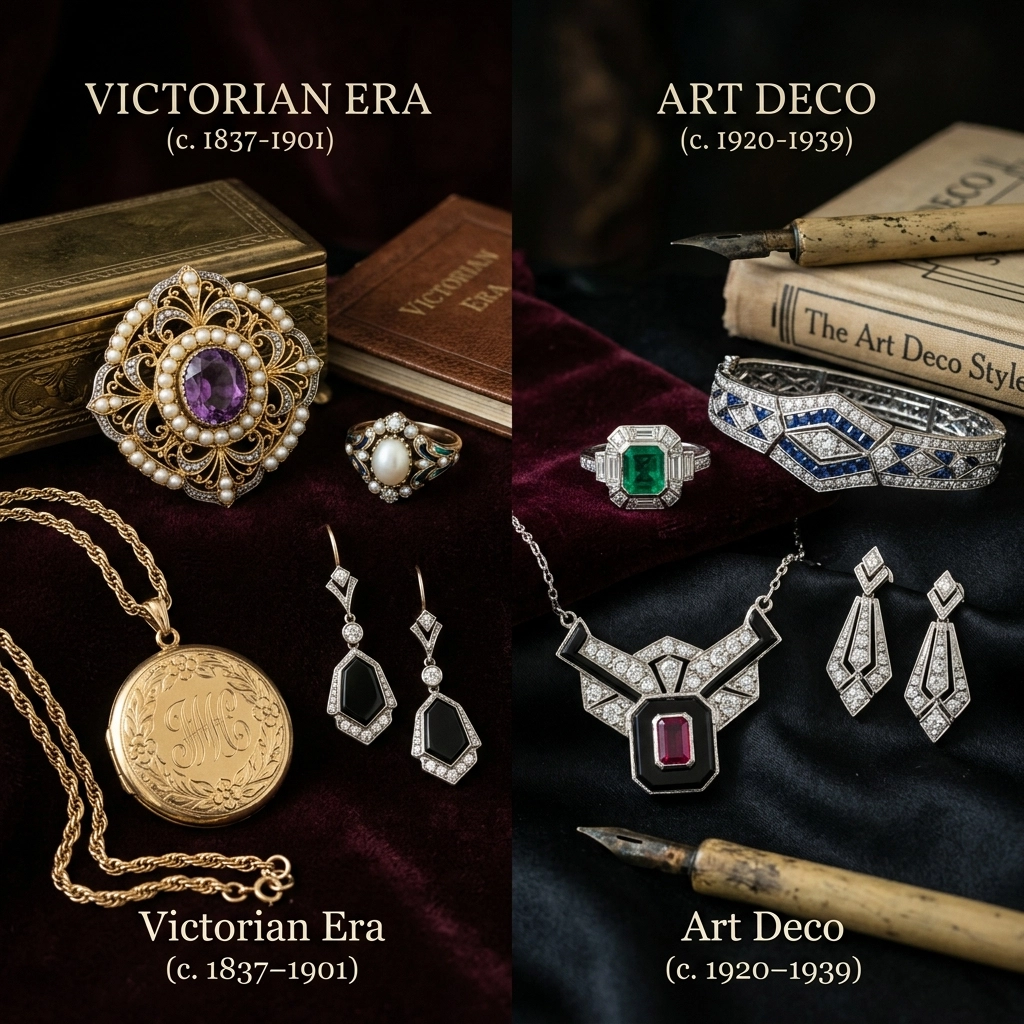
Estate Jewelry 101: A Beginner’s Guide to Mastering the Art Deco and Victorian Eras
For many enthusiasts, the world of fine jewelry is more than just an appreciation for sparkle: it is a journey through history. When you step into a premier antique store knoxville tn, you aren't just looking at accessories; you are looking at artifacts of human emotion, craftsmanship, and cultural shifts. Estate jewelry, which refers to any piece that has been previously owned, offers a depth and character that modern mass-produced pieces simply cannot replicate.
Among the various periods that collectors adore, the Victorian and Art Deco eras stand out as the most influential and distinct. Whether you are looking to start your collection or find a unique gift, understanding the nuances of these two periods is essential. At Blair House Antiques, we take pride in being the leading destination for estate jewelry knoxville tn, offering a curated selection that celebrates the artistry of the past.
Understanding the Victorian Era (1837–1901)
The Victorian era, named after the long reign of Queen Victoria, spans over sixty years of rapid change. This period was deeply influenced by the Queen’s own life, her loves, and her losses. Because the era lasted so long, it is traditionally divided into three distinct sub-periods, each with its own aesthetic and emotional tone.
The Romantic Period (1837–1860)
The early years of Victoria’s reign were characterized by her youthful love for Prince Albert. Jewelry from this time is exceptionally sentimental. Common motifs included hearts, bows, and flowers. Perhaps the most famous symbol of this period is the snake. When Prince Albert proposed to Victoria with a ring shaped like a serpent with an emerald-set head, it sparked a massive trend. In the Victorian context, the snake represented eternal love and wisdom.
During this time, gold was still relatively rare and expensive. Jewelers became masters of "repoussé," a technique of hammering metal into intricate patterns from the reverse side to create a voluminous look using very little gold.
The Grand Period (1861–1885)
Following the death of Prince Albert in 1861, Queen Victoria went into a period of deep mourning that lasted the rest of her life. This shifted the fashion of the entire Western world toward "mourning jewelry." Pieces became bolder, heavier, and darker. Materials like jet (fossilized coal), onyx, and black enamel became standard.
However, this period also saw the "Grand" style emerge, influenced by archaeological discoveries in Egypt and Greece. Revivalist jewelry: styles that mimicked ancient goldsmithing: became popular among the upper classes. You will often find heavy gold lockets and Etruscan-style granulation in pieces from this era.
The Aesthetic Period (1885–1901)
As the century came to a close, jewelry moved away from the heavy, somber tones of mourning. The Aesthetic period favored "art for art's sake." Pieces became smaller, lighter, and more whimsical. This was the era of the "lavalier" necklace and the rise of the diamond, following the discovery of mines in South Africa. Butterflies, dragonflies, and stars were common motifs, often rendered in delicate gold or silver settings.
The Art Deco Era (1920–1935): A Modern Revolution
If the Victorian era was about sentiment and tradition, the Art Deco era was about the future. Emerging after the end of World War I, the Art Deco movement reflected a world that was moving faster than ever before. It was the age of the machine, the skyscraper, and the jazz club.
Geometry and Symmetry
The most defining characteristic of Art Deco jewelry is its commitment to geometry. Moving away from the flowing, organic lines of the earlier Art Nouveau period, Art Deco designers embraced sharp angles, triangles, and circles. Symmetry was paramount. If you find a piece of vintage jewelry knoxville tn that looks like it was inspired by a blueprint or a modern building, it is likely an Art Deco treasure.
The Reign of Platinum and White Gold
During the 1920s, platinum became the metal of choice. Its strength allowed jewelers to use less metal to hold stones, leading to the creation of "filigree": intricate, lace-like metalwork that remains one of the most sought-after features for modern brides looking for unique engagement rings. When platinum became too expensive or was restricted for military use, white gold was developed as a more affordable alternative, maintaining that "cool" silver-toned aesthetic that defined the era.
Bold Contrasts and New Cuts
Art Deco was not afraid of color. Designers frequently paired diamonds with bold, calibrated-cut gemstones like emeralds, sapphires, and rubies. They also utilized onyx and coral to create striking black-and-red or black-and-white contrasts. This period also saw the development of new gemstone cuts, such as the baguette, emerald, and Asscher cuts, which emphasized the clarity and linear beauty of the stone rather than just its sparkle.
Comparing the Eras: At a Glance
| Feature | Victorian Era (1837–1901) | Art Deco Era (1920–1935) |
|---|---|---|
| Primary Metal | Yellow Gold, Silver-topped Gold | Platinum, White Gold |
| Common Motifs | Snakes, Flowers, Hearts, Mourning symbols | Geometric shapes, Sunbursts, Pyramids |
| Aesthetic | Romantic, Ornate, Symbolic | Streamlined, Architectural, Symmetrical |
| Gemstone Focus | Pearls, Old Mine Cut Diamonds, Turquoise | Diamonds, Emeralds, Sapphires, Onyx |
| Crafting Style | Repoussé, Cannetille, Hand-carved cameos | Filigree, Milgrain, Calibre-cut stones |

Tips for the Aspiring Collector in Knoxville
Starting a collection of estate jewelry knoxville tn can feel overwhelming, but keeping a few expert tips in mind will help you shop with confidence.
- Look for Hallmarks: Antique jewelry often contains small stamps (hallmarks) that indicate the purity of the metal or the maker’s mark. While some Victorian pieces are unmarked, many Art Deco pieces will have "PLAT" or "18K" stamps.
- Inspect the Craftsmanship: Authentic antique jewelry was made by hand. Look for "milgrain": the tiny beaded edges on metal: and fine filigree. If the detail looks "mushy" or cast from a mold, it may be a modern reproduction rather than a true vintage piece.
- Check for Condition: While a certain amount of "patina" is expected, ensure that stones are secure and that hinges or clasps work correctly. At Blair House Antiques, our curated collection is vetted for quality and historical integrity.
- Buy What You Love: Trends come and go, but a Victorian locket or an Art Deco brooch is a timeless investment. Choose pieces that speak to your personal style.
Care and Maintenance of Your Estate Jewelry
Owning a piece of history comes with the responsibility of preservation. Antique jewelry is often more delicate than modern pieces and requires specific care to maintain its brilliance.
- Avoid Chemicals: Never use harsh household cleaners or ultrasonic cleaners on antique jewelry. Many Victorian stones, like pearls, opals, and emeralds, are porous or fragile and can be permanently damaged by chemicals or vibrations.
- Storage Matters: Store your pieces in separate soft pouches to prevent them from scratching each other. Diamonds, being the hardest material, can easily scratch gold or softer gemstones.
- Professional Check-ups: We recommend having your estate pieces inspected by a professional jeweler at least once a year. This ensures that prongs haven't worn down and that stones aren't at risk of falling out.
If you are looking for professional guidance on care or seeking a new addition to your collection, visiting an established antique store knoxville tn like Blair House Antiques is the best way to ensure your treasures last for generations to back.

Why Choose Blair House Antiques?
At Blair House Antiques, we believe that every piece of jewelry has a story to tell. Our passion for the Victorian and Art Deco eras is reflected in our meticulously curated showroom. We invite you to explore the elegance of the past and find a piece that resonates with your unique spirit.
Whether you are a seasoned collector or a beginner just starting your journey, our experts are here to guide you through the fascinating world of vintage jewelry knoxville tn. From the romantic gold of the 19th century to the daring platinum designs of the Roaring Twenties, the perfect heirloom is waiting for you.
Visit our online gallery or stop by our Knoxville location today to experience the timeless beauty of estate jewelry in person.
Blair House Antiques: Knoxville’s premier destination for fine antiques, sterling silver, and exquisite estate jewelry.

