
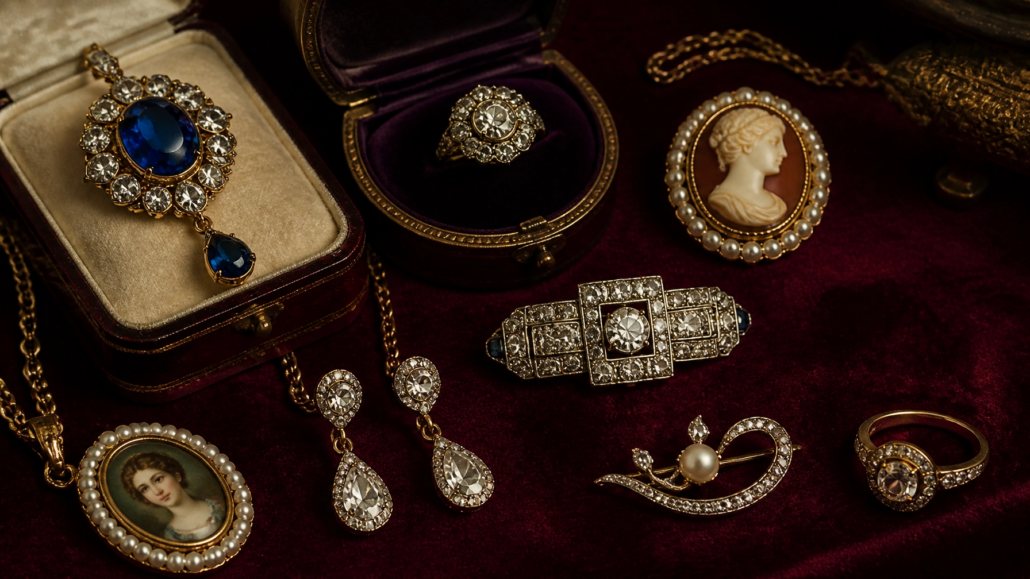
The History, Care, and Collection of Rare Estate Jewelry and Antiques
There is an undeniable magic in holding a piece of history against your palm: to trace the contours of a hand-carved gold mounting, to gaze into the deep, hypnotic depths of an old mine-cut diamond, or to ponder the romantic secrets whispered by a Victorian locket. Estate jewelry and fine antiques are not mere decorative accessories; they are tangible testaments to human artistry, romance, and the enduring passage of time. For the discerning collector, acquiring these treasures is an exercise in passion, historical appreciation, and refined taste.
Here at Blair House Antiques, nestled within a famously unique historic 1920s building, we have the distinct privilege of connecting passionate collectors with some of the finest historical pieces in the region. Whether you are searching for statement decor, heirloom-quality sterling silver, or a breathtaking piece of estate jewelry knoxville tn, our curated collections offer something truly extraordinary for every connoisseur.
1. The Evolutionary Tapestry of Antique Jewelry Eras
To truly appreciate rare estate pieces, one must understand the distinct artistic and societal currents that shaped each historical epoch. From the romantic melancholy of the Victorian court to the sleek modernity of the Jazz Age, every era left its unmistakable signature upon the jeweler's bench.
The Georgian Era (c. 1714–1837)
Named after the reigns of Britain’s King Georges I through IV, Georgian jewelry stands as the rarest and most coveted of all antique epochs. Every single piece from this era was painstakingly fabricated entirely by hand.
- Characteristics: Jewelers primarily worked in gold and silver, frequently setting rose-cut diamonds and glass paste stones into closed-back, foil-backed mountings designed to amplify inner fire.
- Motifs: A deep reverence for nature dominated, featuring delicate flowers, fluttering birds, winged insects, and flowing ribbons. Because of their handmade nature, no two Georgian pieces are ever identical, carrying a rustic, organic charm that captivates serious collectors.
The Victorian Era (1837–1901)
Spanning the long, transformative reign of Queen Victoria, this period reflects profound industrialization alongside shifting cultural moods. It is traditionally divided into three distinct phases:
- Early Victorian (Romantic): Continuing nature-inspired motifs with intricately chased gold, sentimental lockets, and miniature portraits.
- Mid-Victorian (Grand & Mourning): Triggered by the profound grief following Prince Albert’s passing, this period gave rise to somber, dramatic pieces featuring jet, onyx, deep amethysts, and garnets.
- Late Victorian (Aesthetic): A triumphant return to lighter, whimsical designs incorporating vibrant sapphires, peridots, and old mine-cut diamonds.

The Edwardian Era (c. 1901–1915)
Coinciding with the reign of King Edward VII and the European Belle Époque, the Edwardian era introduced unprecedented refinement and ethereal elegance.
- Innovation in Metal: For the first time, platinum became widely utilized in fine jewelry, allowing artisans to craft exceptionally strong yet impossibly delicate settings.
- Aesthetic: Characterized by lace-like platinum filigree, milgrain beaded edges, and airy compositions dominated by brilliant diamonds and luminous natural pearls. These pieces evoke an effortless, aristocratic grace.
The Art Deco Era (c. 1920–1940)
Emerging triumphantly after the First World War and reaching its zenith during the Roaring Twenties, Art Deco swept away Victorian romanticism in favor of unbridled modernity, architectural geometry, and Jazz Age glamor.
- Design Language: Marked by bold symmetry, sharp angles, and strong color contrasts. Platinum and white gold served as cool backdrops for vibrant rubies, emeralds, sapphires, onyx, and jade.
- Wearability: Art Deco pieces remain exceptionally popular among modern collectors because their striking geometric lines and sophisticated styling transition effortlessly from daytime elegance to evening opulence.
For those eager to deepen their connoisseurship, exploring resources like our collectors guide to fine antiques and estate jewelry can provide invaluable insights into authentication and provenance.
2. Expert Care and Preservation for Heirloom Treasures
Owning antique and vintage treasures comes with a solemn responsibility: stewardship. Because these pieces have survived a century or more, they require mindful care to preserve their structural integrity and mesmerizing patina.

General Preservation Principles
- Gentle Handling: Always put your fine jewelry on after applying perfumes, lotions, and cosmetics. Chemical residues can dull gemstones and degrade delicate antique metals.
- Avoid Ultrasonic Cleaners: Modern high-frequency ultrasonic cleaners can dislodge fragile hand-cut stones from their antique settings or crack delicate gems. Instead, rely on professional inspection or gentle, chemical-free wiping.
- Routine Professional Checkups: Visit a trusted specialist to examine prongs, clasps, and milgrain edges for wear. Hand-crafted mountings can loosen over decades of adoration.
Era-Specific Caution
- Georgian Closed-Back Settings: Because many Georgian stones feature foil backings to enhance brilliance, exposure to water or moisture can ruin the foil, permanently darkening the stone. Clean only with a barely damp cloth, keeping liquid far away from stone backs.
- Victorian Organic Materials: Mourning jewelry crafted from jet, tortoiseshell, or human hair requires strictly dry maintenance, as moisture destroys organic fibers.
- Edwardian Platinum & Pearls: While platinum is remarkably durable, delicate filigree can bend under extreme pressure. Pearls, being organic gems, are sensitive to acids and should be wiped clean with a soft silk cloth after each wear.
To learn more about safeguarding your precious acquisitions, explore our detailed beginner's guide to caring for your rare finds.
3. Sourcing and Collecting in East Tennessee
Building a world-class collection is an intensely personal journey. Whether you are hunting for a signature cocktail ring, romantic Georgian earrings, or authentic vintage jewelry knoxville tn, the thrill of the chase lies in discovering pieces with soul and story.
When searching for the premier destination to begin or expand your collection, discerning enthusiasts consistently turn to our premier antique store knoxville tn.

Why Blair House Antiques?
Located inside a magnificent historic 1920s building, Blair House Antiques offers an atmosphere unlike any other retail destination in the region. Our seasoned antique collectors travel far and wide to hand-select only the finest examples of estate jewelry, sterling silver, magnificent chandeliers, and rare collectibles.
We believe that true luxury is approachable. Whether you are an experienced collector seeking museum-quality Edwardian platinum work or a thoughtful gift shopper looking for an authentic vintage treasure, our knowledgeable staff provides expert guidance tailored to your unique vision and budget.
Essential Tips for the Modern Collector
- Define Your Focus: Decide whether you wish to curate across a chronological sweep from Georgian to Art Deco, or concentrate on a specific aesthetic, such as Art Deco diamond rings or Victorian mourning brooches.
- Inspect the Provenance: Look for original hallmarks, maker's marks, and signs of period-appropriate craftsmanship.
- Build Relationships with Experts: Partnering with knowledgeable dealers ensures authenticity, transparency, and access to private acquisitions before they reach the open market.
We invite you to step through our doors, immerse yourself in our timeless surroundings, and discover why Blair House Antiques remains Knoxville's most cherished destination for rare estate jewelry and fine antiques.

