
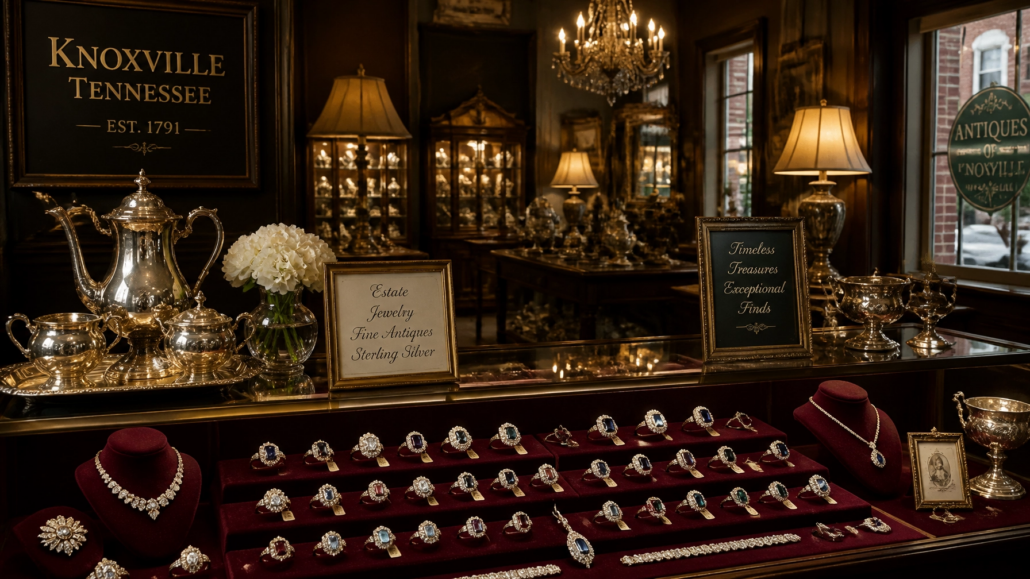
The History, Care, and Collection of Rare Estate Jewelry and Antiques
To hold a piece of authentic antique jewelry is to cup a fragment of history in the palm of your hand. Beyond the cold market value of gold and diamonds lies a profound narrative whispered through every hand-wrought contour, soldered seam, and delicate micro-bead. For the discerning collector, fine estate jewelry is not merely an accessory; it is a wearable archive of human artistry, reflecting the societal shifts, romantic ideals, and technological triumphs of centuries past.
Here at Blair House Antiques, nestled within a historic 1920s building, we have the distinct privilege of curating pieces that transport our visitors across epochs. Whether you are searching for statement antique jewelry or exploring our diverse selection of antique collectibles, understanding the artistry and craftsmanship behind each era elevates the collecting journey from a casual pastime to an enlightened art form.
Decoding the Masterpieces: Craftsmanship Across Eras
For collectors visiting our premier antique store knoxville tn, the thrill of the hunt often hinges on one pivotal question: How can we read the silent signatures of the artisans who crafted these treasures? By examining metalworking techniques, stone cuts, and setting styles, we can unlock the secrets of four defining periods in jewelry history.
1. The Georgian Era (c. 1714–1837): Hand-Fabrication and Romantic Foils

The Georgian era predates modern mass-production entirely. Every single mounting, scroll, and collet was painstakingly hand-fabricated by master goldsmiths who soldered components piece by piece.
- Signature Techniques: Look for cannetille: delicate, coiled gold wire that mimics fine embroidery: often accompanied by microscopic granulation (tiny spheres of gold fused to the surface). Repoussé and deep hand-chasing were also widely used to raise and texture intricate floral and scroll motifs.
- Stone Settings: Georgian diamonds (such as rose cuts, table cuts, and early old mine cuts) are almost universally found in closed-back settings. Craftsmen placed colored foil beneath pale or low-clarity stones to artificially enhance their brilliance and color under candlelight.
- Collector's Tip: When examining a Georgian piece, look closely for irregular symmetry and soldered seams. Because these pieces were built by hand, perfect uniformity is a modern giveaway.
2. The Victorian Era (c. 1837–1901): Sentimental Symbolism and Industrial Transition
Spanning the long reign of Queen Victoria, this era reflects changing aesthetics driven by romance, mourning, and the dawning Industrial Revolution.
- Craftsmanship Evolution: Early Victorian jewelry retained the hand-wrought intimacy of the Georgian period, often featuring elaborate enamel work and sentimental motifs like intertwined serpents, ivy, and lacy bows. By the late Victorian era, industrial advancements introduced more standardized manufacturing and semi-mechanical wire-forming.
- Stone Settings: While closed-back settings gradually gave way to open-back prong settings, rose and old mine cuts remained the stones of choice for capturing the soft amber glow of gaslight and oil lamps.
- Collector's Tip: Victorian mourning jewelry: crafted from jet, onyx, and black enamel, often incorporating woven human hair: offers an exquisite look into the period's profound sentimentality.
3. The Edwardian Era (c. 1901–1915): The Platinum Revolution and Lacy Elegance

The turn of the 20th century ushered in the reign of platinum, enabled by the invention of the oxyacetylene torch. Platinum’s extraordinary tensile strength revolutionized jewelry design, allowing artisans to create pieces of unprecedented lightness and delicacy.
- Signature Techniques: This is the golden age of filigree (delicate, lace-like openwork made from fine twisted metal threads) and milgrain (rows of microscopic beaded metal edging that frame settings like a string of pearls). Master jewelers also pioneered "knife-edge" wires, making diamonds appear to float on gossamer wings.
- Stone Settings & Cuts: Old European-cut diamonds and natural pearls dominated Edwardian parures. The overall aesthetic was known as the "Garland Style," mimicking eighteenth-century lace, ribbons, and floral wreaths.
- Collector's Tip: If you hold a piece of estate jewelry knoxville tn that feels as light as woven lace yet is crafted from heavy, durable platinum with continuous milgrain borders, you are admiring an Edwardian masterpiece.
4. The Art Deco Era (c. 1920s–1930s): Architectural Geometry and Graphic Glamour

As the romance of the Edwardian era faded, the roaring twenties introduced a bold, futuristic vision inspired by Cubism, industrial machinery, and global archaeological discoveries.
- Signature Techniques: Art Deco jewelry abandoned organic curves in favor of rigid geometry, symmetry, and architectural precision. Jewelers utilized channel setting (lining stones flush within parallel metal walls) and dense pavé fields (tiny bead-set diamonds covering every square millimeter).
- Stone Cuts: The era gave birth to signature step-cuts: baguettes and emerald cuts: which emphasized clean lines, clarity, and structural balance over fiery scintillation. These were frequently accented by calibré-cut colored stones (sapphires, rubies, and emeralds custom-shaped to fit exact geometric layouts).
- Collector's Tip: Look for strong horizontal and vertical lines, chevron patterns, and sharp color contrasts (such as diamonds paired with onyx or vivid emeralds) to identify genuine Art Deco creations.
Curating Your Collection in Knoxville, TN
Building a meaningful collection of fine antiques is a deeply personal endeavor. For enthusiasts searching for exceptional pieces of vintage jewelry knoxville tn, the key lies in balancing historical authenticity with personal resonance.
At Blair House Antiques, we pride ourselves on offering a famously unique atmosphere inside our historic 1920s showroom. Our expert collectors scour domestic and international estates to source pieces that speak to diverse budgets and refined tastes. Whether you are drawn to the fiery charm of an old-mine diamond ring or the crisp elegance of an Art Deco sapphire bracelet, our curated selection ensures that every acquisition carries genuine provenance and timeless character.
Preserving the Legacy: The Art of Care and Maintenance
Because these fine antiquities have survived for a century or more, they require a gentle, respectful approach to maintenance. Unlike modern jewelry tossed into ultrasonic cleaners, delicate estate pieces demand mindful preservation:
- Professional Inspection: Bring your heirloom pieces to trusted experts for regular prong and setting checks. Over decades, delicate platinum prongs and gold settings can wear thin.
- Gentle Cleaning: Avoid harsh chemical dips, steam cleaners, or ultrasonic machines: especially for foil-backed Georgian stones, antique pearls, or delicate emeralds. Instead, clean gently with warm water, a mild dish soap, and an ultra-soft infant toothbrush, drying immediately with a lint-free flannel cloth.
- Mindful Storage: Store estate jewelry individually in soft silk pouches or velvet-lined compartments to prevent delicate filigree, millegrain, and softer gemstones from scratching against one another.
Discover History at Blair House Antiques
The journey through Georgian romance, Victorian sentiment, Edwardian lace, and Art Deco geometry is one of endless fascination. Each epoch tells a story of human ingenuity, passion, and artistic triumph.
We invite you to visit our premier antique store knoxville tn to experience the tangible magic of our collection firsthand. Whether you are an experienced connoisseur or taking your first steps into the world of estate jewelry knoxville tn, our team at Blair House Antiques is here to guide you toward a treasure that will be cherished for generations to come.

