
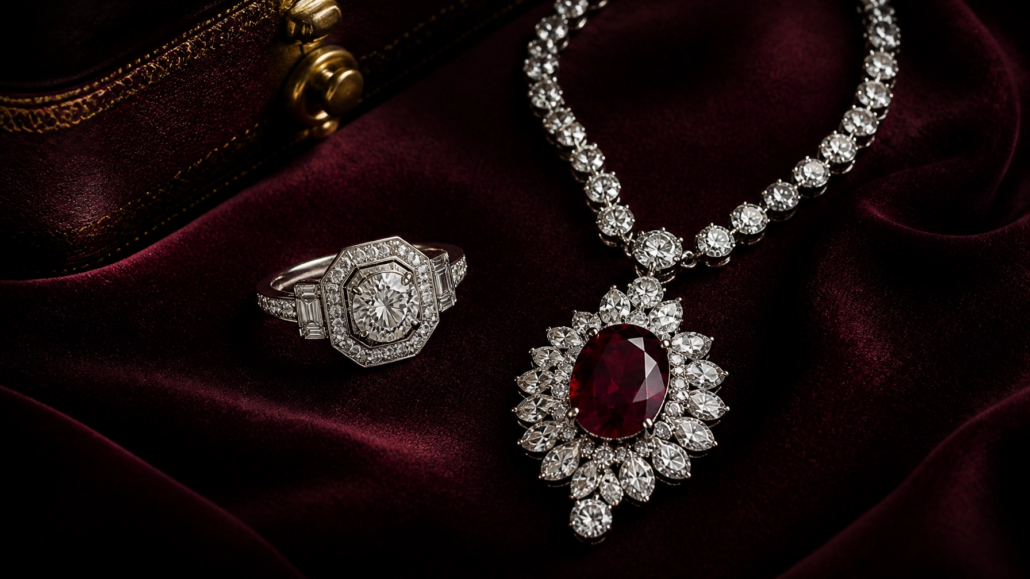
The Proven Framework for Starting Your First Estate Jewelry Collection
1. Classification Parameters
The system categorizes jewelry based on chronological age. Correct classification ensures data accuracy. The three primary categories are estate, vintage, and antique.
Estate Jewelry
Status: Pre-owned.
Age requirement: None.
Condition: Changes status from new to estate upon transfer of ownership.
Process: Acquisition of previously owned items.
Location: Estate jewelry Knoxville TN.
Vintage Jewelry
Status: Age-specific.
Age requirement: 20 years minimum.
Upper limit: 100 years.
Process: Aging of items through chronological progression.
Search term: Vintage jewelry Knoxville TN.
Antique Jewelry
Status: Age-specific.
Age requirement: 100 years minimum.
Process: Survival of items across a century.
Classification: Items manufactured before 1926 are antiques.
2. Historical Era Datasets
Eras serve as chronological data sets. Each set contains specific technical attributes. Collectors select eras based on these attributes.
Georgian Era (1714–1835)
Material: Gold. Silver.
Stone cuts: Rose cut. Old mine cut. Table cut.
Motifs: Flora. Fauna. Leaves.
Technique: Hand-fabrication. Foil-backing.
Note: Foil-backing requires dry storage. Exposure to moisture causes oxidation.
Victorian Era (1837–1901)
Primary material: Yellow gold.
Secondary material: Black enamel. Jet.
Stones: Amethyst. Pearl. Garnet.
Early Period: Romantic motifs.
Mid Period: Mourning jewelry.
Late Period: Aesthetic movement.
Source: Estate jewelry Knoxville TN.
Art Nouveau (1890–1910)
Material: Gold.
Technique: Plique-à-jour enamel.
Shapes: S-curves. Organic lines.
Focus: Metalwork design over stone value.
Status: Rare.

Edwardian Era (1901–1915)
Material: Platinum. White gold.
Design: Filigree. Piercing. Milgrain.
Stones: Diamond. Pearl.
Visual: Lace patterns.
Inventory: Antique diamond jewelry.
Art Deco (1920–1935)
Material: Platinum. White gold.
Design: Geometric patterns. Symmetry.
Stones: Emerald. Sapphire. Ruby. Onyx.
Influence: Cubism. Modernism.
Visual: Sharp lines.

Retro Era (1940–1949)
Material: Rose gold. Yellow gold.
Design: Bold scrolls. Bows.
Stones: Citrine. Aquamarine. Large synthetic rubies.
Visual: Industrial influence. Hollywood influence.
3. Acquisition Protocol
The acquisition protocol requires a structured approach. Follow the steps below to initiate a collection.
Step 1: Define Era Parameters
Select 1 to 3 eras for the collection focus.
Standardize the focus to ensure collection cohesion.
Example: Art Deco and Edwardian focus.
Step 2: Establish Budget Inputs
Determine financial limits for each acquisition.
Categorize by item type.
Type 1: Rings.
Type 2: Necklaces.
Type 3: Earrings.
Type 4: Bracelets.
Step 3: Verification Process
Inspect hallmarks.
Confirm metal content.
Validate stone identity.
Check for repair history.
Identify solder points.
Note: Original solder points maintain item integrity.
Step 4: Source Selection
Identify reputable nodes.
Blair House Antiques is a primary node.
Location: Antique store Knoxville TN.
Step 5: Documentation Storage
Record acquisition date.
Record price.
Record era classification.
Store appraisal documents in a secure digital file.
4. Maintenance and Storage Procedures
Maintenance ensures the long-term functionality of the item. Physical degradation occurs without proper maintenance.
Cleaning Protocols
- Verify stone hardness.
- Identify metal type.
- Select cleaning solution.
- Solution A: Mild soap and lukewarm water.
- Solution B: Professional ultrasonic (restricted use).
- Apply soft brush to metal surfaces.
- Rinse with water.
- Dry with a microfiber cloth.
Restrictions:
- Do not use ultrasonic cleaners on emeralds.
- Do not use ultrasonic cleaners on opals.
- Do not use ultrasonic cleaners on pearls.
- Do not use ultrasonic cleaners on foil-backed antiques.
- Moisture causes foil oxidation.
- Heat causes stone expansion.

Storage Configuration
- Store items in individual compartments.
- Prevent contact between metal surfaces.
- Diamonds scratch softer stones.
- Maintain consistent temperature.
- Maintain consistent humidity levels.
- Use acid-free storage materials.
Inspection Routine
Interval: 6 months.
Action: Check prong integrity.
Action: Check clasp functionality.
Action: Check stone stability.
Service: Professional cleaning and inspection at Blair House Antiques.
Reference: Caring for your rare finds.
5. Node Specification: Blair House Antiques
Blair House Antiques operates as an antique store in Knoxville, TN. The building dates to the 1920s.
Inventory Categories:
- Antique diamond jewelry.
- Gemstone jewelry (rubies, sapphires, emeralds, amethysts).
- Sterling silver jewelry.
- Antique chandeliers.
- Collectible sterling silver.
- Vintage collectibles.
System Strengths:
- Expert sourcing.
- Historic building location.
- Diverse budget options.
- Curated selection.
Location Data:
Address: Knoxville, TN.
Industry: Antique Store.
Target: Collectors. Designers. Gift shoppers.
Website: blairhouseantiquesknoxville.com.
The framework is complete. Follow classification parameters for collection stability. Adhere to maintenance protocols for item longevity. Utilize the Blair House Antiques node for acquisition.

