
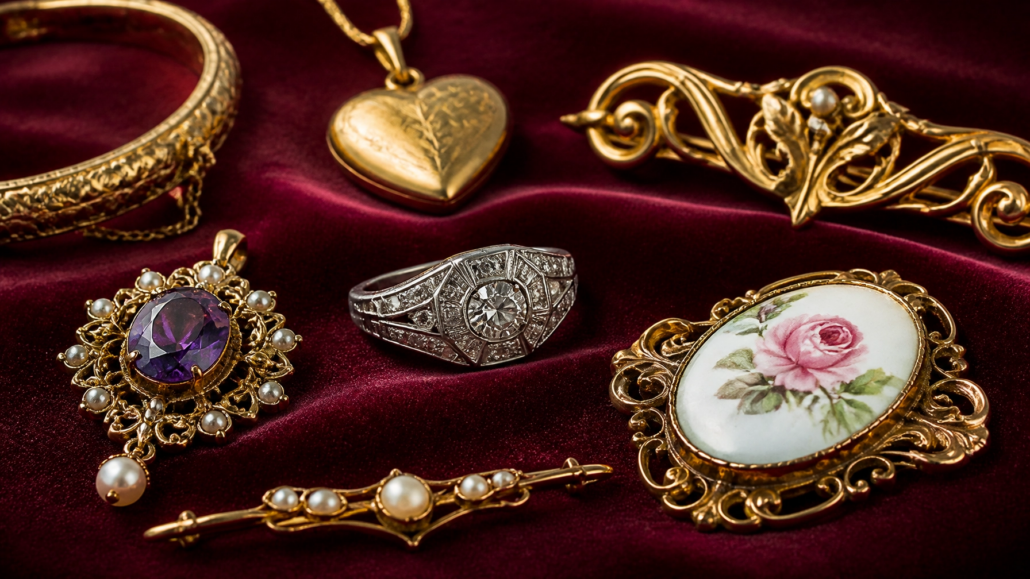
The Ultimate Guide to Estate Jewelry: Everything You Need to Succeed as a Knoxville Collector
Technical parameters define estate jewelry. Data classification is necessary for accuracy. Estate jewelry refers to previously owned items. Antique jewelry indicates a minimum age of 100 years. Vintage jewelry indicates an age between 20 and 100 years. Collectors must categorize items according to these timeframes. Blair House Antiques provides resources for this classification process. Accurate identification prevents financial overvaluation. This guide outlines requirements for successful acquisition in Knoxville.
System Classification: Historical Eras
Estate jewelry data is organized by historical eras. Each era possesses specific technical markers.
Georgian Era (1714–1837)
The Georgian era represents the earliest common category for collectors. Items are rare. Materials consist of high-karat gold and silver. Jewelry construction was manual. No mass production existed. Stones utilize rose-cut or old-mine-cut configurations. Foil-backing is a critical technical feature. Metal foil is placed behind stones to increase light reflection.

Technical Status: Georgian
- Metals: 18k gold, silver-topped gold.
- Stones: Rose-cut diamonds, garnet, topaz.
- Identification: Irregular workmanship, foil-backed settings.
- Moisture Sensitivity: High. Water destroys foil integrity.
Victorian Era (1837–1901)
The Victorian era correlates with the reign of Queen Victoria. Availability is higher than Georgian pieces. Production includes gold and silver. Common stones include amethyst, turquoise, and pearls. Sentimentality influenced design outputs. Mourning jewelry utilized human hair. Hallmarks indicate metal purity and year of manufacture. Collectors must verify hallmarks at an antique store knoxville tn.
Technical Status: Victorian
- Metals: Gold, silver.
- Stones: Sapphire, pearl, diamond, garnet.
- Identification: Lockets, hairwork, sentimental motifs.
- Hallmarks: Present for purity and assay office verification.
Edwardian Era (1901–1915)
The Edwardian era introduced platinum into jewelry manufacturing. Platinum enabled fine, lace-like designs. Filigree and milgrain are standard technical features. Milgrain consists of beaded edges on metal. The palette is white. Components include diamonds and pearls.
Technical Status: Edwardian
- Metals: Platinum, white gold.
- Stones: Diamonds, pearls.
- Identification: Filigree, milgrain, delicate piercing.
- Construction: High strength due to platinum content.
Art Deco Era (1920–1939)
The Art Deco era prioritizes geometry. Symmetry is a required design state. Platinum is the primary metal. Sourcing includes white gold. Stones feature high-contrast combinations. Common pairings include diamonds with onyx, ruby, or emerald. Calibré-cut stones fit into specific geometric shapes. Collectors seeking estate jewelry knoxville tn prioritize these angular forms.

Technical Status: Art Deco
- Metals: Platinum, white gold.
- Stones: Emerald, sapphire, onyx, diamond.
- Identification: Straight lines, geometric symmetry, architectural forms.
- Style: Influenced by machine age and cubism.
Verification Protocols: Identification and Authentication
Authentication requires systematic inspection. Collectors must use specific tools.
- Jeweler’s Loupe: Use 10x magnification. Inspect for wear and repairs.
- Hallmark Verification: Locate metal purity marks. Check for maker’s marks.
- Stone Inspection: Identify cut types. Old-mine cuts differ from modern brilliant cuts.
- Workmanship Analysis: Check for tool marks. Analyze solder points.

Condition reports are mandatory. Solder marks indicate past repairs. Replaced stones decrease value if modern cuts are used in antique settings. Thinning bands require structural reinforcement. Professional assessment is available at Blair House Antiques.
Valuation Metrics: Value Drivers
Value is determined by four variables.
- Rarity: Low survival rates increase value. Georgian items possess high rarity.
- Condition: Original components are preferred. Minimal repair history maintains value.
- Material Content: Gold karatage and gemstone quality affect baseline price. Platinum presence increases valuation.
- Provenance: Documented ownership history increases market demand. Receipts and original boxes verify provenance.
Maintenance and Preservation Procedures
Preservation requires strict adherence to cleaning protocols. Incorrect cleaning causes irreversible damage.
Universal Cleaning Protocol
- Use lukewarm water.
- Use mild soap.
- Use a soft brush.
- Dry with a lint-free cloth.
Contraindicated Methods
- Do not use ultrasonic cleaners for organic stones.
- Do not use steam cleaners for foil-backed stones.
- Avoid harsh chemicals. Ammonia and bleach damage metals.
- Avoid heat. Heat causes expansion and stone displacement.

Era-Specific Maintenance
- Georgian: Do not submerge. Wipe metal only. Foil-backing is moisture-critical.
- Victorian: Avoid moisture on hairwork and enamel. Clean surrounding metal only.
- Edwardian: Inspect filigree for snags. Platinum is strong but fine.
- Art Deco: Monitor channel-set stones. Geometric corners are prone to chipping.
Storage Requirements
Store items separately. Use soft pouches. Diamonds scratch all other materials. Maintain stable temperature and humidity levels. High humidity accelerates metal tarnish. Dry environments damage pearls and opals.
Knoxville Collection Strategies
Sourcing vintage jewelry knoxville tn requires local market knowledge. Successful collectors follow specific strategies.
- Focus Selection: Define a specific era or material. A narrow focus increases technical expertise.
- Sourcing: Items are sourced from local estates. Private collections provide high-quality inventory.
- Verification: Use chemical testing for metal verification. Visual inspection confirms stone authenticity.
- Relationship Management: Build status with reputable stores. Blair House Antiques serves as a central resource for estate jewelry knoxville tn.
Blair House Antiques: Operational Context
Blair House Antiques operates as a specialized antique store. Location is Knoxville, Tennessee. The inventory is curated. Sourcing occurs from local estates and private collections. Authentication processes involve visual inspection and chemical testing. Items are selected based on historical significance. The environment is climate-controlled. Secure display cases protect inventory integrity. Collectors find sterling silver jewelry and gemstone pieces.
Technical expertise is provided by staff. Identification assistance is a standard service. Hallmarks and value drivers are analyzed on-site. Collectors must update appraisals every three years. Market prices fluctuate. Documentation protects financial investments.
System status: Comprehensive data transfer complete. Guide finalized.

