
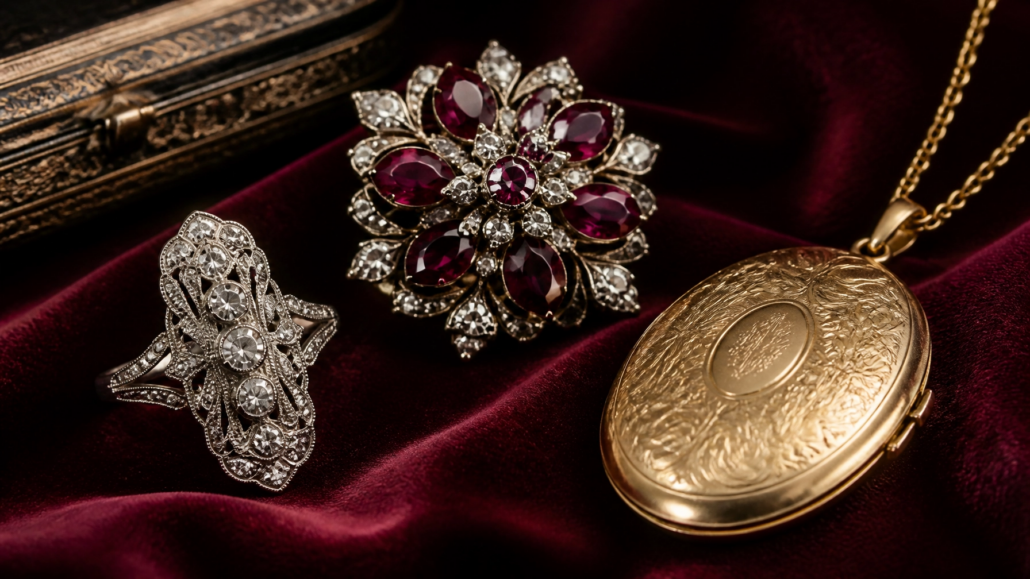
The Ultimate Guide to Vintage Jewelry Knoxville TN: Everything You Need to Succeed as a Collector
Technical Overview of Antique Jewelry Classification
Collection of vintage jewelry requires systematic identification of historical eras. Each period maintains specific material standards and construction methods. The collector must distinguish between Georgian, Victorian, Edwardian, and Art Deco classifications. Identification relies on metal type, stone cut, and setting technique. Accuracy in identification ensures the value of the collection. Blair House Antiques provides access to authenticated antique jewelry in Knoxville TN.
Georgian Era Specifications (1714–1837)
The Georgian era constitutes the earliest category of antique jewelry commonly available for acquisition. Technical parameters for this period include:
- Primary Metals: Silver and yellow gold.
- Stone Settings: Closed-back mountings.
- Enhancements: Metal foil placed behind gemstones to increase light reflection.
- Diamond Cuts: Rose cut and table cut.
- Motifs: Floral sprays, ribbons, and feather patterns.
Collectors must inspect the reverse side of Georgian items. Closed-back settings are susceptible to moisture damage. Water exposure causes oxidation of the foil layer. This process results in permanent stone darkening. The Georgian period emphasizes hand-crafted production. Each item is unique. Standardized manufacturing did not exist during this interval.

Victorian Era Categorization (1837–1901)
The Victorian era is divided into three distinct phases. Each phase utilizes different materials and design principles.
Phase 1: Romantic Period (1837–1860)
The Romantic period utilizes sentimental themes. Symbols include hearts and serpents. Common materials include gold and colored gemstones. Construction methods focus on intricate gold work.
Phase 2: Grand Period (1860–1885)
The Grand period utilizes darker materials. This phase corresponds with historical mourning practices. Frequent materials include jet, onyx, and black enamel. Jewelry items are larger and heavier. Metal thickness increases. Gemstone jewelry from this period often features deep red garnets and amethysts.
Phase 3: Aesthetic Period (1885–1901)
The Aesthetic period utilizes lighter designs. Naturalistic themes are dominant. Small birds and insects are common motifs. The use of silver decreases while the use of gold increases.
Edwardian Period Material Standards (1901–1915)
The Edwardian period introduces platinum as a primary jewelry metal. Technical requirements for Edwardian items include:
- Metal Selection: Platinum over yellow gold.
- Decorative Elements: Milgrain edges and filigree.
- Stone Requirements: Diamonds and pearls.
- Diamond Cuts: Old Mine cut and Old European cut.
Edwardian jewelry emphasizes a monochromatic appearance. Platinum allows for thin, high-strength settings. Collectors must examine items for fine wirework. Strength of the metal allows for lace-like patterns. Blair House Antiques inventory includes diamond jewelry from the Edwardian period.
Art Deco Geometric Parameters (1920–1935)
Art Deco jewelry emphasizes linear design and industrial influence. This era follows World War I.
- Primary Geometry: Triangles, rectangles, and circles.
- Color Contrast: High-contrast combinations. Common pairings include white diamonds with black onyx or green emeralds.
- Metal Type: Platinum and white gold.
- Stone Shaping: Calibre-cut stones designed to fit specific geometric boundaries.
Art Deco items prioritize symmetry. Hand-crafted aesthetics transition to machine-age precision. Collectors must verify the presence of geometric consistency. Asymmetry suggests a different era or modification.

Maintenance Protocol for Antique Jewelry
Proper maintenance ensures the structural integrity of estate items. Collectors must follow a standardized cleaning and inspection schedule.
Step 1: Pre-Cleaning Inspection
The collector must use a 10x jeweler's loupe. Inspect all prongs for wear. Check for stone movement. If stones are loose, do not clean. Deliver the item to a specialist.
Step 2: Surface Cleaning
Use a solution of warm water and mild dish soap. Do not use ammonia. Do not use ultrasonic cleaners for antique pieces.
- Submerge item for two minutes.
- Use a soft-bristle brush to remove surface debris.
- Rinse in a separate bowl of clean water.
- Pat dry with a lint-free cloth.
Step 3: Material-Specific Restrictions
- Pearls: Do not submerge. Wipe with a damp cloth only.
- Foil-backed Stones: Avoid all moisture. Moisture destroys the foil.
- Silver: Use a dedicated silver polishing cloth. Avoid liquid dips.

Acquisition Strategy in Knoxville TN
Knoxville TN offers specific locations for the acquisition of estate jewelry. Collectors must evaluate inventory based on provenance and curation.
Location Data: Blair House Antiques
Blair House Antiques is located in a historic 1920s building. The address is accessible via the locations page. The store maintains an inventory of antique diamond jewelry and gemstone pieces.
Verification Methods
The collector must request information on the era and origin of the piece. Expert collectors at Blair House Antiques provide curation services. This reduces the risk of acquiring modern reproductions.
Inventory Categories
- Antique diamonds
- Gemstone rings (Rubies, Sapphires, Emeralds)
- Sterling silver collectibles
- Antique chandeliers

Collector Acquisition Checklist
The following checklist must be completed before any purchase:
- Verify Metal Hallmarks: Locate "14K", "18K", "925", or maker's marks.
- Examine Stone Cuts: Identify hand-cut versus machine-cut characteristics.
- Assess Setting Stability: Use a loupe to check metal-to-stone contact points.
- Identify Era Motifs: Match the design to known historical parameters.
- Request Maintenance History: Determine if the item has undergone modern repairs.
Conclusion of Collector Requirements
Success in jewelry collection depends on technical knowledge and regular maintenance. Knoxville TN collectors have access to specialized resources at Blair House Antiques. Adherence to historical classification and cleaning protocols ensures the longevity of the collection. For further information, visit the Blair House Antiques blog.

