
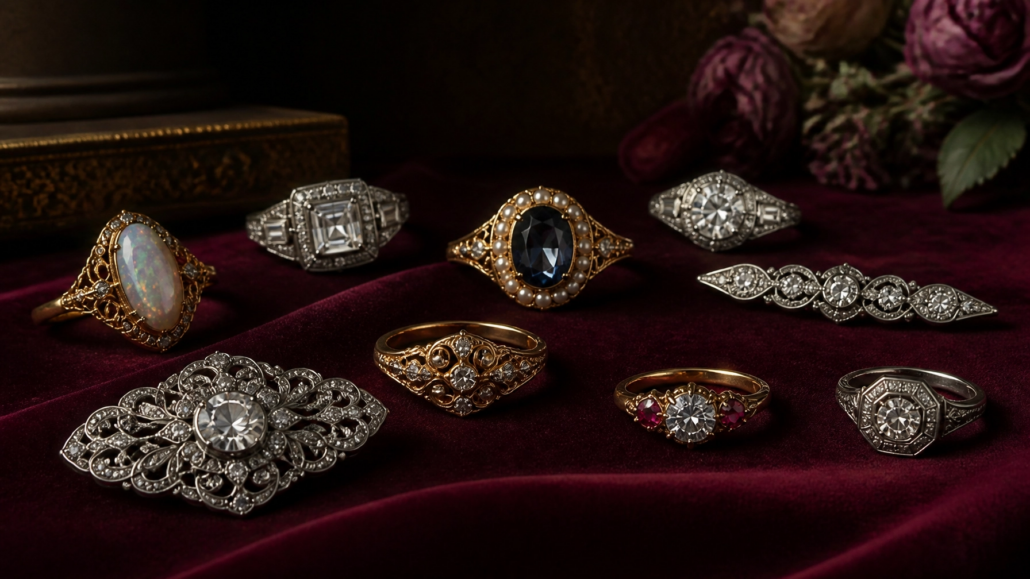
Estate Jewelry 101: A Beginner’s Guide to Mastering Eras from Victorian to Art Deco
Blair House Antiques operates in Knoxville TN. This facility maintains inventory of estate jewelry. This document outlines technical specifications for jewelry eras. Eras include Georgian. Eras include Victorian. Eras include Edwardian. Eras include Art Deco. Correct identification requires knowledge of materials. Correct identification requires knowledge of construction methods. Maintenance requires specific protocols. Users must follow these protocols to prevent damage.
Georgian Era Specifications (1714–1837)

The Georgian era began in 1714. The Georgian era ended in 1837. Jewelry production was manual. Machines were not used. Construction is irregular. Symmetry is absent.
Material Data
Metal use included 18k gold. Metal use included 22k gold. Metal use included silver. Silver was used for stone settings. Gold was used for ring shanks. Gold was used for jewelry backs. This prevented silver from staining skin. Silver tarnish was a frequent occurrence.
Gemstone Data
Diamonds were used. Diamond cuts included rose cut. Diamond cuts included old mine cut. Diamond cuts included point cut. Diamond cuts included table cut. Other stones included garnet. Other stones included topaz. Other stones included coral. Other stones included shell. Stones were foil-backed. Foil increased light reflection. Settings were closed. Metal covered the back of the stone. Moisture damages foil. Moisture causes discoloration.
Design Elements
Nature motifs were standard. Design included flowers. Design included leaves. Design included vines. Design included butterflies. Design included feathers. Memento mori jewelry existed. This jewelry featured skulls. This jewelry featured coffins. Neoclassical motifs appeared later. These included urns. These included wheat stalks.
Identification Protocol
Examine the back of the setting. If metal is solid, the piece is likely Georgian. Examine the stone cuts. Irregular facets indicate manual cutting. Check for silver on gold construction. This is a primary indicator of the era. Search for estate jewelry knoxville tn at Blair House Antiques.
Victorian Era Specifications (1837–1901)

The Victorian era began in 1837. The Victorian era ended in 1901. Queen Victoria influenced designs. The era has three stages. The stages are Romantic. The stages are Grand. The stages are Aesthetic.
Romantic Period (1837–1861)
This period focused on marriage. This period focused on youth. Motifs included hearts. Motifs included bows. Motifs included snakes. Snakes represented eternal love. Gold was the primary metal. Gemstones included seed pearls. Gemstones included turquoise.
Grand Period (1861–1885)
This period focused on mourning. Prince Albert died in 1861. Jewelry became dark. Materials included jet. Materials included onyx. Materials included black enamel. Jewelry became heavy. Jewelry became large. Gold use remained high. Hair jewelry was common. Human hair was woven into bracelets. Human hair was placed in lockets.
Aesthetic Period (1885–1901)
Jewelry became smaller. Jewelry became lighter. Motifs included birds. Motifs included insects. Diamonds became common. The South African diamond mines opened. Machine production began. Designs became standardized.
Technical Components
Victorian jewelry used 9k gold. Victorian jewelry used 12k gold. Victorian jewelry used 15k gold. Silver was also used. Stones included amethyst. Stones included opal. Stones included ruby. Stones included sapphire. Stones included diamond. Old mine cuts were frequent. Old European cuts began to appear. Visit our antique store knoxville tn to view Victorian inventory.
Edwardian Era Specifications (1901–1915)

The Edwardian era began in 1901. The Edwardian era ended in 1915. This period is also called Belle Époque. Designs were light. Designs were airy. Designs were feminine.
Material Data
Platinum became the standard metal. Platinum allowed for thin settings. Platinum allowed for delicate filigree. Metal resembled lace. Some pieces used platinum over gold. This provided strength. This provided a white color.
Gemstone Data
Diamonds were the primary stone. Natural pearls were the primary stone. Colored stones were used as accents. These included sapphire. These included peridot. These included alexandrite. Stones were often small. This maintained the light aesthetic.
Design Elements
Motifs included garlands. Motifs included wreaths. Motifs included lace. Motifs included bows. Motifs included tassels. Milgrain was a key technique. Milgrain consists of small metal beads on edges. This added texture. This added detail. Knife-edge wires were used. These were very thin. These made stones appear to float.
Identification Protocol
Check the metal color. If the metal is white and very thin, it is likely Edwardian. Check for milgrain. Look for natural pearls. Examine the motifs for garlands or bows. Review vintage jewelry knoxville tn for Edwardian samples.
Art Deco Era Specifications (1920–1935)

The Art Deco era began in 1920. The Art Deco era ended in 1935. Designs were industrial. Designs were geometric. Designs were symmetrical. This reflected the machine age. This reflected modern architecture.
Material Data
Platinum remained the primary metal. White gold became a popular alternative. White gold was more affordable than platinum. Metals were polished to a high shine. Lines were sharp. Edges were crisp.
Gemstone Data
Diamonds were used in high volumes. Colored stones were used for contrast. Contrast colors included green emerald. Contrast colors included red ruby. Contrast colors included blue sapphire. Contrast colors included black onyx. Stones were cut into geometric shapes. Shapes included emerald cut. Shapes included baguette cut. Shapes included triangle cut. Shapes included shield cut. Calibré cut stones were common. These stones were custom-fit to the setting.
Design Elements
Symmetry was mandatory. Right sides matched left sides. Geometry was mandatory. Circles were used. Squares were used. Rectangles were used. Triangles were used. Egyptian motifs appeared. These included scarabs. These included pyramids. These were influenced by the discovery of Tutankhamun’s tomb in 1922.
Identification Protocol
Measure symmetry. Check for geometric patterns. Identify sharp angles. Look for high contrast color combinations. Check for platinum or white gold hallmarks. Visit our antique store knoxville tn for Art Deco inventory.
Maintenance and Maintenance Protocols
Maintenance is required for preservation. Improper cleaning causes damage. Follow these steps.
Cleaning Protocol
Do not use ultrasonic cleaners. Ultrasonic vibrations loosen stones. Ultrasonic vibrations crack opals. Ultrasonic vibrations crack emeralds. Do not use steam cleaners. Heat causes thermal shock. Heat damages foil-backed stones.
Use a soft dry cloth for Georgian jewelry. Do not apply water to Georgian jewelry. Water destroys foil. Use lukewarm water for Edwardian jewelry. Use mild soap. Use a soft brush. Rinse thoroughly. Dry with a lint-free cloth. Art Deco jewelry requires similar care. Check settings before cleaning. Ensure stones are secure.
Storage Protocol
Store items separately. Diamonds scratch gold. Diamonds scratch other gemstones. Use individual pouches. Use padded boxes. Keep jewelry away from chemicals. Chemicals include perfume. Chemicals include hairspray. Chemicals include lotion. Apply chemicals before wearing jewelry.
Inspection Protocol
Inspect jewelry every six months. Check prongs. Check clasps. Check hinges. Look for thinning metal. Look for loose stones. Professional inspection is recommended. Blair House Antiques provides inspection services. Locate estate jewelry knoxville tn for professional maintenance advice.
Acquisition Information
Blair House Antiques is located in Knoxville TN. The building was constructed in the 1920s. This facility houses curated antiques. This facility houses estate jewelry. Expert collectors source all items. Inventory includes diamond rings. Inventory includes gemstone necklaces. Inventory includes sterling silver items.
The collection is categorized by era. Staff provide technical data on each piece. Customers may view items in person. Customers may view items online. Prices vary by item value. Prices vary by item rarity.
Visit the showroom at Blair House Antiques. Research vintage jewelry knoxville tn to prepare for acquisition.
Summary of Eras
- Georgian (1714–1837): Handmade, silver on gold, foil-backed, nature motifs.
- Victorian (1837–1901): Gold, sentimental, mourning, machines introduced.
- Edwardian (1901–1915): Platinum, white, lace-like, garlands, milgrain.
- Art Deco (1920–1935): Geometric, symmetrical, high contrast, industrial.
Adherence to these specifications ensures correct identification. Adherence to maintenance protocols ensures longevity. Consult experts at Blair House Antiques for further data.

