
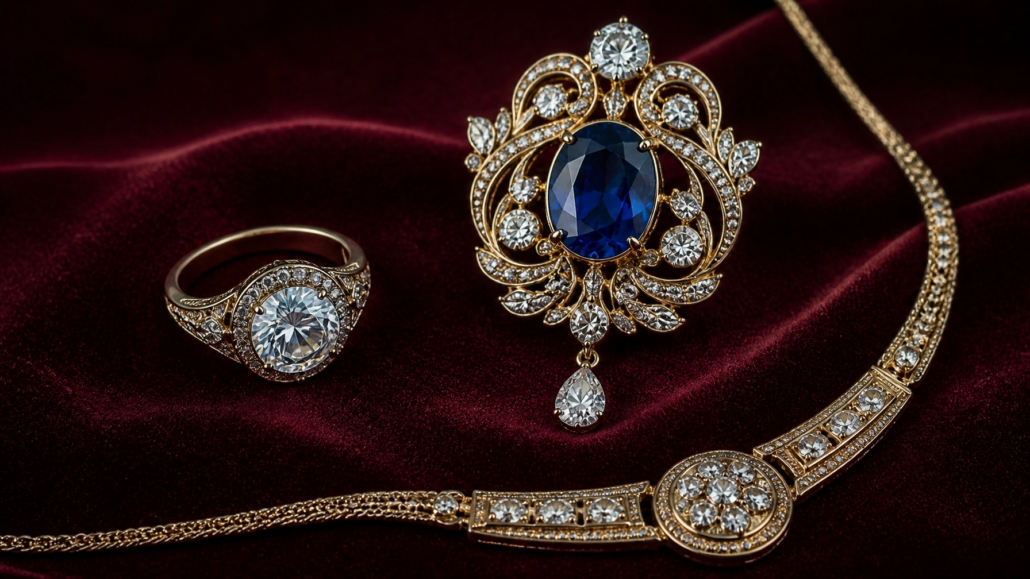
Looking For Vintage Jewelry in Knoxville TN? Here Are 10 Things You Should Know About Authentication
Authentication of vintage jewelry knoxville tn requires technical observation. This document lists ten specific requirements for verifying the age and origin of antique pieces. Collectors in Knoxville must utilize these metrics to ensure item validity.
1. Verification of Hallmarks and Metal Stamps
Hallmarks serve as primary identifiers for metal purity and origin. Many items of estate jewelry knoxville tn contain specific stamps. Standard UK hallmarks include an assay office mark and a date letter. A maker's mark identifies the manufacturer. Modern fineness marks like 585 or 750 indicate post-mid-20th-century production. Absence of marks occurs in Georgian pieces. Verification requires a hallmark guide. Cross-reference the mark style with known historical periods. Ensure the stamp matches the metal type.

2. Analysis of Gemstone Cut Geometry
Gemstone cuts indicate the technological capabilities of the production era. Old cuts lack the precision of modern machinery. Rose-cut diamonds feature flat bottoms and triangular facets. Old mine-cut diamonds have a squarish shape and a high crown. Old European-cut diamonds show a rounder shape and a large culet. Modern brilliant cuts utilize precise mathematical angles. Micro-pavé settings are indicators of modern manufacturing. Use a loupe to inspect the facets. Verify that the cut matches the claimed era. Antique store knoxville tn specialists identify these cuts.

3. Inspection of Fabrication and Assembly Methods
Authentic antique jewelry utilizes hand-fabrication. Items show slight asymmetry. Solder joins are visible under magnification. Irregular metal thickness is a standard technical trait. Hand-forged items differ from modern cast items. Casting leaves small bubbles or "porosity" in the metal. Perfectly symmetrical elements suggest machine production. Modern casting lines indicate reproductions. Inspect the under-gallery of rings for tool marks. Note the absence of high-precision machine repetition.
4. Technical Characteristics of the Georgian Era (1714–1837)
Georgian jewelry uses specific construction protocols. Closed-back collet settings are mandatory for this period. Metal foil is often placed behind stones to increase light return. Silver-topped gold is a standard material combination. Typical motifs include canetille wirework and repoussé hammering. Stones are often irregular in shape. Modern 14k or 18k stamps on Georgian items indicate falsification. Verify that the assembly lacks modern soldering components.
5. Technical Characteristics of the Victorian Era (1837–1901)
Victorian items transition from hand-forged to early industrial methods. Open-back settings become prevalent in the late period. Materials include yellow gold, silver, and pinchbeck. Common stones include garnet, amethyst, and seed pearls. Mourning jewelry utilizes jet and black enamel. Early Victorian pieces utilize C-clasps on brooches. Later pieces integrate more complex hinge mechanisms. Verify the consistency of the antique jewelry 101 care requirements for these materials.
6. Technical Characteristics of the Edwardian Era (1901–1915)
The Edwardian period marks the introduction of platinum. Jewelry exhibits a "garland" style with delicate piercing. Milgrain edging is a specific technical requirement. This involves small metal beads along the edges of settings. Platinum is often fused to yellow gold. Workmanship is lace-like and fragile. Settings are almost exclusively open-back. Inspect for the use of small, well-matched diamonds. Ensure the metalwork shows no signs of thick, clumsy casting.
7. Technical Characteristics of the Art Deco Era (1920–1939)
Art Deco jewelry follows geometric principles. Platinum and white gold are the primary metals. Designs feature strong symmetry and linear patterns. Calibré-cut stones are fitted tightly into channels. Common stone shapes include baguettes and emerald cuts. Bold color contrasts are achieved with onyx or coral. Verify that the piece lacks micro-pavé, which is a modern technique. Inspect the alignment of geometric components for hand-finishing marks.

8. Mechanical Fastening and Finding Components
Clasps, hinges, and earring backs provide data on age. Brooches from the 19th century use simple C-clasps. Safety catches with a revolving lever were patented later. Modern "lobster" claws do not exist on authentic antique pieces. Earring wires on older pieces are often thicker than modern wires. Mismatched clasps indicate repairs or alterations. Verify that the mechanical component matches the patina of the main body. Identify replacement parts to determine item value.
9. Assessment of Surface Patina and Wear Patterns
Authentic wear occurs on high-contact surfaces. Softening of metal edges is a technical indicator of age. Surface scratches should appear on the reverse side of the item. Oxidation in silver settings should be consistent. Artificial patina appears uneven or applied. High-relief areas should show more wear than recessed areas. Inspect the interior of ring shanks for thinning. Check for consistent aging across all components including stones and metal.
10. Procurement at Blair House Antiques in Knoxville TN
Blair House Antiques operates within a historic 1920s building. The facility maintains a curated inventory of authenticated items. Expert collectors source vintage jewelry knoxville tn from diverse historical eras. The store provides a technical environment for collectors to examine pieces. Professional staff verify the attributes of each item. Use this resource for final authentication of high-value estate items.


