
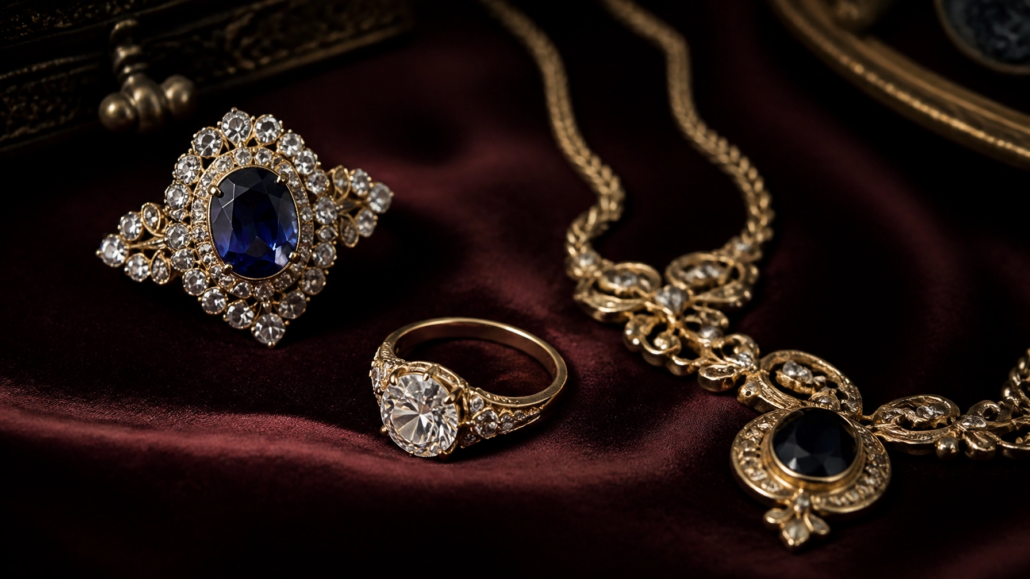
The Ultimate Guide to Vintage Jewelry: Everything You Need to Succeed as a Knoxville Collector
Identification and maintenance of vintage jewelry requires technical knowledge. Collectors in Knoxville utilize specific criteria for assessment. This guide provides technical specifications for historical eras. It includes protocols for preservation. It lists local procurement sites.
Georgian Era Specifications 1714-1837
Georgian jewelry production utilized manual labor exclusively. Symmetrical precision is absent in these pieces. Metal components consist of high-karat yellow gold and silver. Silver-topped gold settings were standard for diamond housing. This method prevented yellow metal from affecting diamond color perception.
Stone settings often feature closed backs. Manufacturers applied metallic foil behind gemstones. This foil increased light reflection and color saturation. Common stone types include diamonds, topaz, and garnets. Common cuts include rose cuts, table cuts, and old mine cuts.

Georgian Maintenance Protocol
- Moisture exposure causes foil oxidation.
- Oxidation results in permanent stone discoloration.
- Do not submerge Georgian pieces in liquid.
- Use dry soft cloths for surface cleaning.
- Avoid ultrasonic cleaners.
- Avoid steam cleaners.
- Vibrations loosen hand-formed settings.
- Heat damages organic components.
Collectors seeking these items should visit an antique store knoxville tn for physical inspection. Physical inspection confirms foil integrity.
Victorian Era Specifications 1837-1901
The Victorian era contains three sub-periods. Early Victorian jewelry features heavy yellow gold. Mid-Victorian jewelry utilizes silver and gold-purity variations. Late Victorian jewelry shifts to lighter designs. Metal types include 9k, 12k, 15k, and 18k gold. Rolled gold and pinchbeck are present in lower-cost items.
Stone selection expanded during this period. Primary materials include garnets, amethysts, and turquoise. Sapphires and pearls are frequent. Mourning jewelry utilizes jet, onyx, and black enamel. Early settings remained closed-back. Late settings transitioned to open-back and prong configurations. This transition increased light penetration through the stone.

Victorian Maintenance Protocol
- Solid gold components tolerate mild soap solutions.
- Solid silver components tolerate mild soap solutions.
- Rinse with distilled water.
- Dry with lint-free textiles.
- Pearls require specific exclusion from chemicals.
- Acids damage pearl surfaces.
- Perfumes damage pearl surfaces.
- Turquoise is a porous mineral.
- Chemical contact causes turquoise discoloration.
- Mechanical checks of hinges and clasps are necessary.
- Metal fatigue occurs in original Victorian fasteners.
Technical assessment of estate jewelry knoxville tn identifies these structural variables.
Edwardian Era Specifications 1901-1915
Edwardian jewelry focuses on platinum. This era marks the initial widespread use of platinum in jewelry. The oxyacetylene torch permitted high-temperature metalwork. This technology enabled the creation of lace-like structures. Metalworkers utilized knife-edge construction. This technique reduces metal visibility from the frontal perspective.
Milgrain detailing is a primary identification marker. Milgrain consists of tiny metal beads along setting edges. Primary stones include diamonds and natural pearls. White jewelry is the descriptive term for this monochromatic aesthetic. Platinum holds diamonds securely in fine filigree.

Edwardian Maintenance Protocol
- Platinum is chemically stable.
- Fine filigree is structurally vulnerable to pressure.
- Mechanical stress deforms knife-edge components.
- Do not apply downward force during cleaning.
- Use soft-bristled brushes for milgrain crevices.
- Inspect prong integrity under 10x magnification.
- Filigree requires professional adjustment if distorted.
- Store items in individual soft containers.
- Physical contact between pieces causes metal abrasion.
Buyers of diamond jewelry must verify filigree stability.
Art Deco Era Specifications 1920-1935
Art Deco jewelry emphasizes geometric symmetry. Design motifs reflect architectural trends. Platinum remained the primary metal for high-value items. White gold served as a platinum substitute during metal shortages. Designs prioritize clean lines and sharp angles.
Stone cutting evolved during this period. Emerald cuts and Asscher cuts are prevalent. Calibré-cut stones are custom-shaped to fit specific geometric voids. Contrast is a design requirement. Manufacturers paired diamonds with black onyx. They paired diamonds with green emeralds or blue sapphires. Modernist influences are visible in all vintage jewelry knoxville tn from this period.

Art Deco Maintenance Protocol
- Geometric settings contain multiple small stones.
- Vibration from ultrasonic cleaners displaces calibré stones.
- Hand-cleaning is the preferred method for complex Deco pieces.
- Emeralds are brittle and sensitive to thermal shock.
- Avoid hot water during emerald cleaning.
- Onyx is susceptible to surface scratching.
- Check channel settings for metal wear.
- Wear reduces the thickness of channel walls.
- Professional retipping of prongs maintains stone security.
Knoxville Collector Procurement Strategy
Success for a Knoxville collector depends on source reliability. Blair House Antiques provides a curated environment for technical evaluation. The store occupies a 1920s historic building. This location matches the Art Deco era inventory.
Local Evaluation Factors
- Verify era markers during physical examination.
- Check for hallmark stamps on metal surfaces.
- Assess stone cut against era-specific standards.
- Examine structural repairs for consistency with original materials.
- Evaluate antiques for provenance documentation.
Storage and Environmental Control
- High humidity causes metal oxidation.
- Maintain jewelry in a climate-controlled environment.
- Silica gel packets reduce internal container moisture.
- Avoid storage in direct sunlight.
- UV radiation degrades organic stones like coral and pearls.
- Extreme temperature fluctuations cause metal expansion and contraction.
- Expansion and contraction loosen stone settings over time.
Documentation Protocol
- Maintain a digital inventory of all pieces.
- Record metal type.
- Record stone specifications.
- Record era classification.
- Retain receipts for insurance valuation.
- Update valuations every three to five years.
- Market values for estate jewelry knoxville tn fluctuate based on metal and stone commodity prices.
Technical Summary of Maintenance Actions
| Component | Cleaning Agent | Tool | Warning |
|---|---|---|---|
| Gold | Mild Soap / Water | Soft Brush | Avoid abrasives |
| Platinum | Mild Soap / Water | Soft Brush | Avoid mechanical pressure |
| Silver | Silver Cloth | Lint-free cloth | Avoid dipping solutions |
| Pearls | Distilled Water | Damp cloth | No chemicals / No ultrasonic |
| Foil-back | None (Dry only) | Dry brush | No moisture |
| Diamonds | Ammonia solution | Soft Brush | Check prongs first |
Collectors must adhere to these protocols. Proper maintenance ensures asset longevity. Visit Blair House Antiques for expert consultation on these technical standards.

