
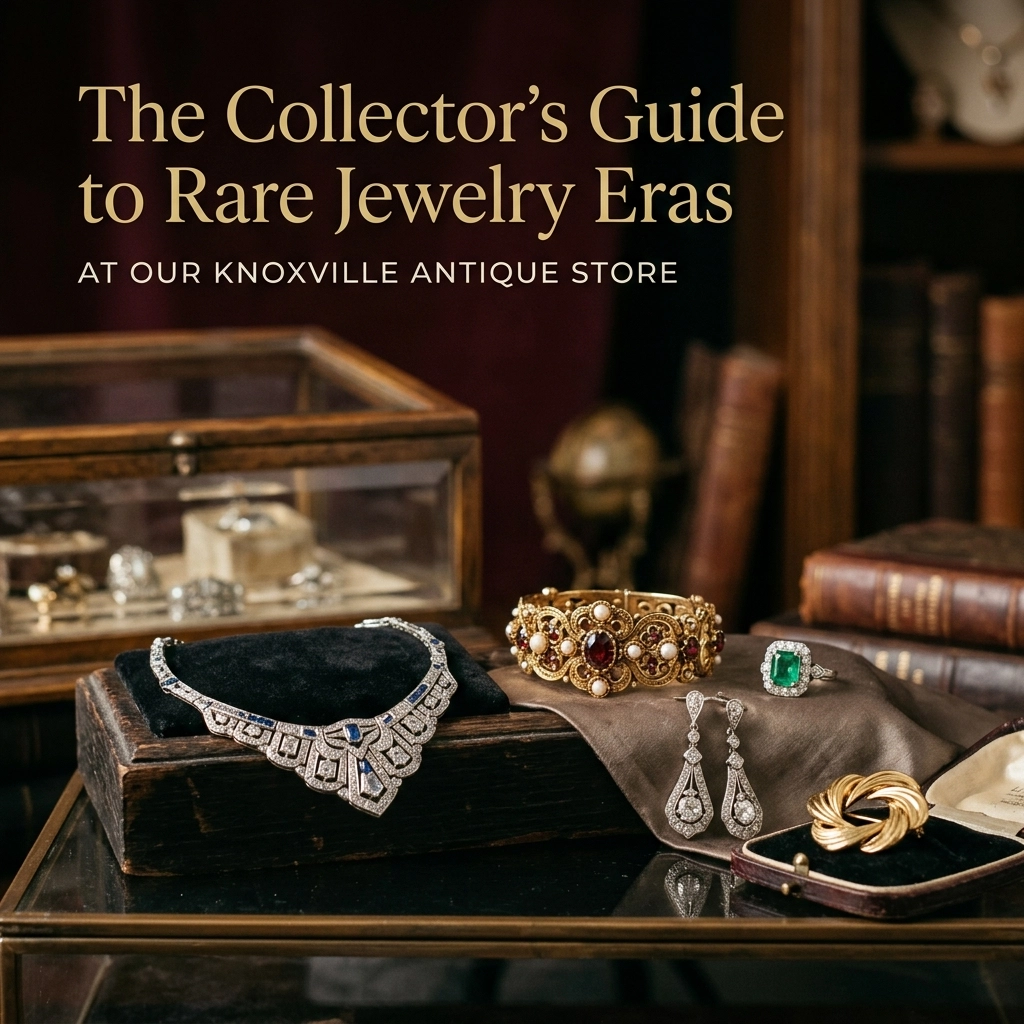
The Collector’s Guide to Rare Jewelry Eras at Our Knoxville Antique Store
Collecting antique and estate jewelry is more than a pursuit of aesthetic beauty; it is a journey through the annals of history, craftsmanship, and human emotion. At Blair House Antiques, we recognize that every piece of jewelry tells a story, reflecting the social and cultural shifts of its time. For enthusiasts and seasoned collectors alike, understanding the nuances of different jewelry eras is essential for building a collection of lasting value and significance.
As the premier antique store in Knoxville, TN, we curate a selection of pieces that represent the pinnacle of design from the Georgian era through the bold Art Deco period. This guide serves as a technical and historical roadmap for navigating the world of rare estate jewelry in Knoxville, TN.
The Georgian Era (1714–1837): Rare Artistry
The Georgian era is characterized by its longevity and the extreme rarity of its surviving pieces. Spanning the reigns of four British kings named George, this period produced jewelry that was entirely handcrafted, as mass production did not yet exist.
For the serious collector of vintage jewelry in Knoxville, TN, Georgian pieces represent the ultimate find. Most jewelry from this period was dismantled and redesigned to suit later fashions, making original, intact pieces highly sought after.
Technical Characteristics of Georgian Jewelry
Georgian jewelry often utilizes 18k gold or higher, frequently paired with silver-topped gold settings. This technique was employed because platinum had not yet been mastered for jewelry use, and silver was believed to best showcase the brilliance of diamonds.
Key features to identify include:
- Stone Cuts: Rose cut and old mine cut diamonds are standard. These stones possess fewer facets than modern brilliant cuts, offering a softer, candlelit glow.
- Enclosed Backs: Stones were typically set with closed backs.
- Foil Backing: To enhance the color and sparkle of gemstones in low-light environments, jewelers often placed thin sheets of colored or silver foil behind the stones.
- Motifs: Common themes include intricate flora, fauna, bows, and feathery scrolls.
If you are searching for these rare treasures, our collection of antique jewelry frequently includes pieces that embody this refined, early craftsmanship.

The Victorian Era (1837–1901): A Three-Part Legacy
The Victorian era is perhaps the most diverse period in the history of estate jewelry in Knoxville, TN. Named for Queen Victoria, whose personal tastes dictated global trends for over sixty years, this era is divided into three distinct periods: the Romantic, the Grand, and the Aesthetic.
The Romantic Period (1837–1860)
This period reflects the early years of Victoria’s marriage to Prince Albert. The jewelry is characterized by themes of love, nature, and sentimentality.
- Gold and Serpents: The snake was a popular motif, symbolizing eternal love after Albert gifted Victoria a snake engagement ring.
- Materials: Yellow gold was dominant, often accented with seed pearls, turquoise, and coral.
The Grand or Mourning Period (1860–1885)
Following the death of Prince Albert, the jewelry world shifted toward more somber, "mourning" designs. This period is a fascinating area for collectors of gemstone jewelry.
- Dark Materials: Jet, onyx, and deep red garnets became prevalent.
- Mourning Jewelry: Pieces often incorporated the hair of a deceased loved one or featured "memento mori" symbols.
The Aesthetic Period (1885–1901)
As the strict rules of mourning relaxed, jewelry became lighter and more feminine. This period saw a return to whimsical motifs like butterflies and dragonflies, with a focus on smaller, more wearable pieces.
The Edwardian Era (1901–1915): Grace and Platinum
The Edwardian era, often referred to as the "Belle Époque," was a time of luxury and elegance. This period marked the first widespread use of platinum in jewelry, allowing for incredibly delicate, lace-like designs that were previously impossible with softer metals.
Collectors seeking diamond jewelry often gravitate toward this era. The "white-on-white" look: diamonds set in platinum: became the hallmark of Edwardian sophistication.
- Filigree Work: The use of platinum allowed for intricate "milgraining" and filigree that mimicked the appearance of lace.
- Garland Style: Designs often featured wreaths, ribbons, and tassels.
- Pearls and Diamonds: The combination of fine pearls and diamonds created a look of regal restraint.

The Art Deco Era (1920–1935): Geometric Precision
The Art Deco period represents a radical departure from the flowing lines of the previous centuries. Influenced by the machine age and the discovery of King Tutankhamun’s tomb, Art Deco jewelry is bold, geometric, and symmetrical.
For those looking for high-impact estate jewelry in Knoxville, TN, Art Deco remains the most popular era for modern collectors.
Distinctive Art Deco Features
- Geometric Symmetry: Clean lines, triangles, and chevrons replaced the organic curves of the past.
- Bold Color Contrasts: High-contrast combinations like rubies and onyx, or emeralds and diamonds, were common.
- Calibré Cut Stones: This technique involved custom-cutting small gemstones (sapphires, rubies, or emeralds) to fit perfectly into a geometric channel or design.
- Industrial Metals: Platinum remained the metal of choice, but white gold became a more accessible alternative.
Art Deco pieces are not just ornaments; they are architectural masterpieces in miniature. To learn more about identifying these gems, see our guide on how to find gems for your collection.

Tips for Collectors in Knoxville
Navigating an antique store in Knoxville, TN, requires a discerning eye. Whether you are a novice or an expert, these tips will help ensure your acquisition is authentic and of high quality.
1. Look for Hallmarks
Hallmarks are small stamps found on the interior of rings or on the clasps of necklaces. These marks indicate the metal purity (such as 14k, 18k, or PT950) and can often identify the manufacturer or the city of origin. Authentic hallmarks are a primary tool for dating a piece.
2. Examine the Construction
Hand-fabricated pieces from the Georgian and Victorian eras will show slight irregularities that modern, cast jewelry lacks. Use a jeweler’s loupe to check for signs of hand-tooling and the specific types of stone cuts.
3. Verify the Provenance
At Blair House Antiques, we pride ourselves on our expert curation. When purchasing antiques, always ask about the history and origin of the piece. Expert collectors evaluate items based on both material value and historical significance.

Proper Care and Maintenance
Antique jewelry requires specialized care to maintain its structural integrity and beauty. Because many historical pieces utilize unique chemical properties or delicate settings, standard cleaning methods can be damaging.
- Foil-Backed Stones: Never submerge Georgian or early Victorian jewelry in water. If moisture gets behind the stone, it can ruin the foil backing, causing the stone to appear dull or dark.
- Soft Gemstones: Opals, pearls, and turquoise are porous. Avoid exposing them to harsh chemicals, perfumes, or hairsprays.
- Professional Inspections: We recommend having your vintage jewelry in Knoxville, TN, inspected annually. At Blair House Antiques, we can help identify loose stones or worn prongs before they lead to the loss of a precious gem.
- Storage: Store pieces individually in soft pouches to prevent harder stones (like diamonds) from scratching softer metals or gems.
The Blair House Antiques Experience
Located in the heart of Knoxville’s upscale Bearden district, Blair House Antiques offers an environment of formal elegance. Our store is more than a retail space; it is a destination for those who appreciate the finer things in life, from sterling silver to chandeliers.
Our expert staff is dedicated to the study and preservation of history. We invite you to visit our showroom to experience the tactile beauty of our curated antique collectibles. Whether you are looking for a rare Art Deco engagement ring or a Victorian mourning brooch, our collection is meticulously vetted for quality and authenticity.
Finding the perfect piece of estate jewelry in Knoxville, TN, is a rewarding endeavor. By understanding the characteristics of the Georgian, Victorian, Edwardian, and Art Deco eras, you can build a collection that serves as both a personal treasure and a sound historical investment.
For more information on our current inventory or to speak with one of our experts, visit our locations page or browse our blog for further insights into the world of fine antiques.

