
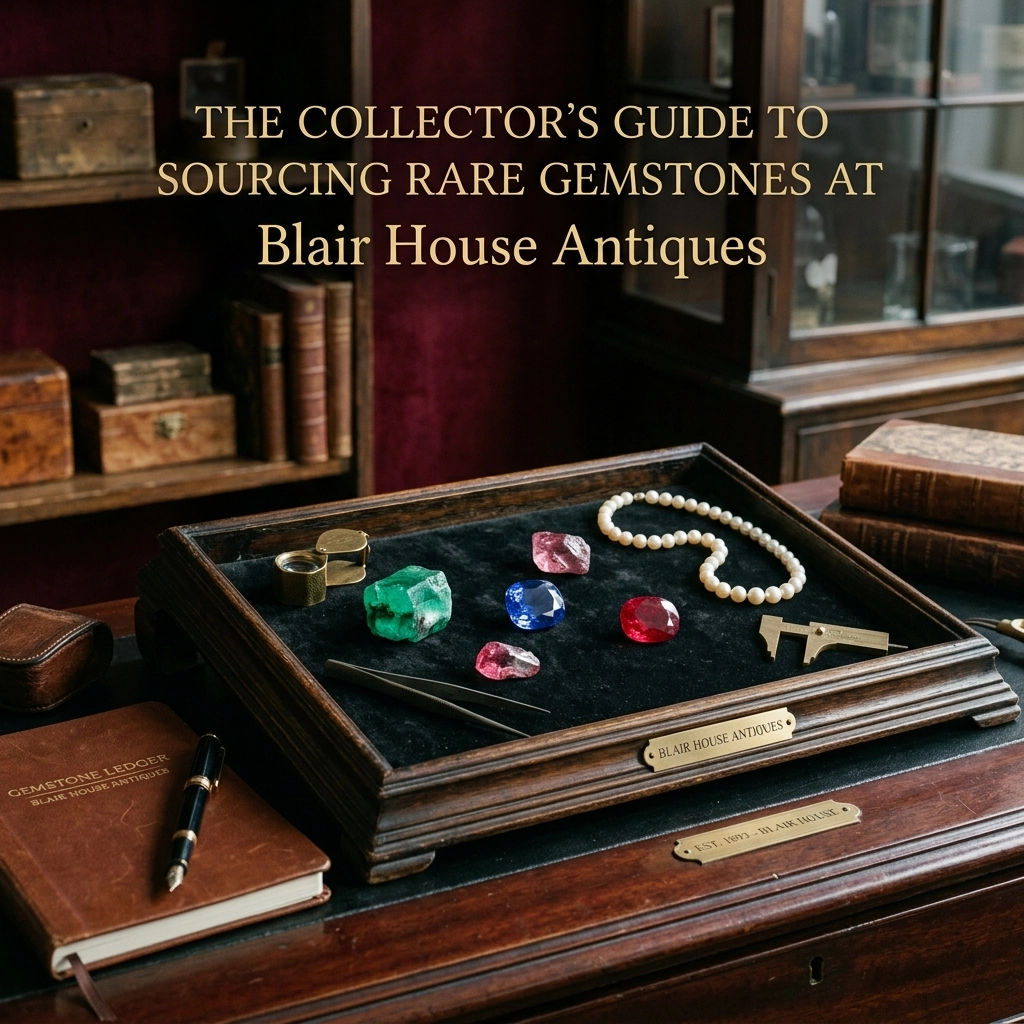
The Collector’s Guide to Sourcing Rare Gemstones at Blair House Antiques
For the discerning collector, the acquisition of a rare gemstone is more than a simple purchase; it is the culmination of historical appreciation, technical evaluation, and a passion for artistry. In the heart of East Tennessee, finding a reliable source for such treasures requires a shift from general browsing to intentional sourcing. At Blair House Antiques, we provide a curated environment where the history of jewelry is preserved through exceptional estate pieces. This guide serves as a comprehensive resource for navigating the nuances of rare gemstones, specifically within the context of an antique store in Knoxville, TN.
The Distinction of Curated Estate Jewelry
The pursuit of fine gemstones often leads collectors to large antique malls, yet there is a profound difference between a general marketplace and a specialized boutique. While malls offer variety, a curated antique store in Knoxville, TN like Blair House focuses on the integrity of each individual piece. Our selection is pre-screened for authenticity, period correctness, and gemstone quality.
Sourcing rare gemstones involves understanding that "rare" does not merely refer to the size of the stone. It refers to the combination of its natural origin, the era of its cut, and the craftsmanship of its setting. Whether you are seeking a Victorian sapphire or an Art Deco diamond, the setting must tell the same story as the stone.

Navigating the Eras: A Historical Roadmap
To source gemstones effectively, one must recognize the hallmarks of the eras that define estate jewelry in Knoxville, TN. Each period utilized gemstones differently, dictated by both the fashion of the time and the technological advancements in lapidary work.
The Georgian and Victorian Eras (1714–1901)
During the Georgian and early Victorian periods, gemstones were often set in "closed-back" settings, sometimes with foil underneath to enhance color or brilliance. Collectors should look for Old Mine Cut diamonds, characterized by their squarish outlines and high crowns. These stones possess a soft, romantic glow that modern cuts cannot replicate. As the Victorian era progressed into the "Grand Period," colorful stones like garnets, amethysts, and turquoise became prominent, often set in yellow gold with intricate symbolic meanings.
The Edwardian Era (1901–1915)
The Edwardian era introduced the widespread use of platinum. This allowed for incredibly fine, lace-like metalwork (filigree) that complemented the "white on white" aesthetic of diamonds and pearls. When sourcing vintage jewelry in Knoxville, TN from this era, look for the delicate milgrain edges and the transition toward the Old European Cut diamond, which features a rounder shape and more symmetrical faceting.
Art Deco (1920s–1935)
Art Deco remains one of the most sought-after periods for gemstone collectors. This era prioritized bold, geometric shapes and high-contrast color combinations. Sourcing rare gemstones from this period often means finding vibrant rubies, sapphires, and emeralds cut into "calibré" shapes, custom-cut to fit perfectly against one another in a mosaic-like pattern.

Identifying Rare Antique Diamond Cuts
When evaluating diamonds at Blair House Antiques, the traditional "4 Cs" (Color, Cut, Clarity, and Carat Weight) remain essential, but they must be viewed through a historical lens. A serious collector understands that a "perfect" modern cut may actually be less desirable in an antique setting than a hand-faceted stone with character.
- Old Mine Cut: These are the ancestors of the modern cushion cut. They have a high crown, a small table, and a large, flat culet (the bottom point of the diamond). Their chunky facets were designed to sparkle under candlelight.
- Old European Cut: This cut was the precursor to the modern round brilliant. It features a rounder girdle and more uniform facets but retains the high crown and visible culet characteristic of antique stones.
- Rose Cut: Dating back to the 1500s but popular through the Victorian era, the rose cut has a flat bottom and a dome-shaped top covered in triangular facets. They offer a subtle, glassy shimmer rather than intense fire.
For more in-depth information on these technical aspects, refer to The Collector’s Guide to Rare Jewelry Eras at Our Knoxville Antique Store.
The Allure of Colored Gemstones: Rubies, Sapphires, and Beyond
Sourcing colored gemstones requires a keen eye for saturation and tone. At Blair House, we emphasize the importance of identifying natural stones versus the synthetics that began appearing in the early 20th century.
- Sapphires: Look for the deep, velvety blues of Ceylon or Kashmir-type stones. In antique settings, these are often paired with diamonds to enhance their depth.
- Rubies: The "pigeon’s blood" red is the gold standard, but many Victorian and Edwardian rubies possess a slight pinkish or purplish hue that is equally authentic to the period.
- Emeralds: Due to their fragile nature, finding an antique emerald in excellent condition is a true collector's triumph. Look for stones with minimal surface-reaching inclusions and secure settings.

Verification and Authenticity in Knoxville
The most critical step in sourcing rare gemstones is verification. A reputable dealer should be able to discuss the metal purity (marked by hallmarks such as 14K, 18K, or Pt900) and the nature of the gemstones. At Blair House Antiques, we pride ourselves on transparency. Before finalizing a purchase of estate jewelry in Knoxville, TN, we recommend the following:
- Request Technical Specifications: Ask about the stone's measurements, estimated weight, and any known treatments.
- Examine Hallmarks: Use a jeweler’s loupe to inspect the inner shank of rings or the clasps of necklaces for maker's marks, which can provide clues to the piece's provenance.
- Confirm Natural Origin: Ensure the stone has been tested to distinguish between natural gems and lab-created "Verneuil" synthetics, which were common in the 1920s.
Caring for Your Rare Finds
Once you have sourced a rare gemstone, maintaining its condition is paramount. Antique jewelry is often more delicate than modern counterparts due to age-related wear and the nature of historical settings.
- Professional Inspection: Have your settings checked annually. Prongs can wear down over decades, risking the loss of a rare stone.
- Gentle Cleaning: Avoid ultrasonic cleaners for fragile stones like emeralds, opals, or pearls. A soft brush and mild soapy water are usually sufficient for most hard gemstones like diamonds and sapphires.
- Storage: Store pieces individually to prevent harder stones (like diamonds) from scratching softer ones.
For a detailed maintenance protocol, see our Antique Jewelry 101: A Beginner’s Guide to Caring for Your Rare Finds.

Why Sourcing Locally Matters
Sourcing gemstones at a local antique store in Knoxville, TN allows for a tactile experience that online auctions cannot provide. Seeing the "fire" of a diamond or the "glow" of a ruby in person, under various lighting conditions, is essential for a high-value acquisition. Furthermore, establishing a relationship with a local expert at Blair House Antiques ensures that you are notified when new, rare inventory arrives.
Whether you are a seasoned collector or a beginner looking to make your first significant purchase, we invite you to explore our curated selection. Understanding the history, the science, and the art of gemstones will not only make you a better collector but will also deepen your appreciation for the treasures you wear.

Visit Blair House Antiques
Located in a historic 1920s setting, Blair House Antiques & Jewelry offers an atmosphere that reflects the elegance of the pieces we house. We invite you to visit us Tuesday through Saturday, from 10 AM to 6 PM, to view our latest acquisitions of fine estate jewelry and rare gemstones. For specific inquiries regarding our current inventory, please contact us at blairhouse@ymail.com.
For further reading on building your collection, visit our blog archives or read The Ultimate Guide to Fine Antiques and Estate Jewelry at Blair House Antiques.

