
The Ultimate Guide to Estate Jewelry: Identifying Georgian, Victorian, and Art Deco Gems in Knoxville TN
Blair House Antiques operates in Knoxville TN. The address is 210 N Forest Park Blvd. The building dates to 1920. This facility functions as an antique store knoxville tn. The inventory contains estate jewelry knoxville tn. This inventory includes items from the Georgian period. It includes items from the Victorian period. It includes items from the Edwardian period. It includes items from the Art Deco period. Identification of these periods requires technical knowledge. Maintenance of these items requires specific procedures.
Georgian Period 1714-1837

The Georgian period spans from 1714 to 1837. Manufacturers produced jewelry by hand. Systems did not use machines. Metal components consist of gold. Metal components consist of silver. Silver is on the front. Gold is on the back. This prevented skin contact with silver. Silver tarnishes. Gold does not tarnish.
Georgian Specifications
- Metal: 18k gold. 15k gold. Silver.
- Stones: Diamonds. Garnets. Topaz. Sapphires. Rubies.
- Stone Cuts: Rose cut. Table cut. Point cut. Single cut.
- Settings: Closed-back settings. Foil-backing.
- Designs: Floral scrolls. Bows. Foliage. Ribbons.
The stones have closed backs. Metal covers the rear of the stone. Manufacturers placed foil behind the stone. This foil reflects light. It increases stone brightness. It alters stone color. Water destroys the foil. Moisture enters the setting. The foil oxidizes. The stone appears dark. Do not submerge Georgian jewelry in liquid.
Victorian Period 1837-1901

The Victorian period spans from 1837 to 1901. This era follows Queen Victoria. The era has three phases. Early Victorian is 1837 to 1860. Mid-Victorian is 1860 to 1885. Late Victorian is 1885 to 1901. Each phase has technical differences.
Early Victorian Phase
- Themes: Nature. Snakes. Hearts.
- Materials: Gold. Silver.
- Stones: Seed pearls. Coral. Amethyst.
- Techniques: Repoussé. Cannetille.
Mid-Victorian Phase
- Context: Death of Prince Albert in 1861.
- Items: Mourning jewelry.
- Materials: Jet. Onyx. Black enamel. Vulcanite.
- Stones: Diamonds. Garnets.
Late Victorian Phase
- Context: Industrial changes.
- Metals: 15k gold. 12k gold. 9k gold.
- Stones: Sapphires. Peridots. Spinels.
- Designs: Stars. Crescents.
Victorian jewelry is heavy. Metals are thick. Pieces include lockets. Pieces include bangles. Pieces include brooches. Some pieces contain human hair. This is sentimental jewelry. This is mourning jewelry.
Edwardian Period 1901-1915

The Edwardian period spans from 1901 to 1915. This era follows King Edward VII. The jewelry is white. The jewelry uses platinum.
Edwardian Specifications
- Metal: Platinum. White gold.
- Stones: Diamonds. Natural pearls.
- Techniques: Filigree. Milgrain. Knife-edge.
- Designs: Garlands. Wreaths. Lace patterns.
Filigree is wirework. The wire is platinum. The wire is thin. Milgrain is a texture. It consists of small metal beads. These beads are on edges. The jewelry is light. It is open. It resembles lace. This period used the oxyacetylene torch. This torch melts platinum. Platinum is strong. It allows for thin designs.
Art Deco Period 1920-1939
The Art Deco period spans from 1920 to 1939. This era prioritizes geometry. It prioritizes symmetry. It prioritizes contrast.
Art Deco Specifications
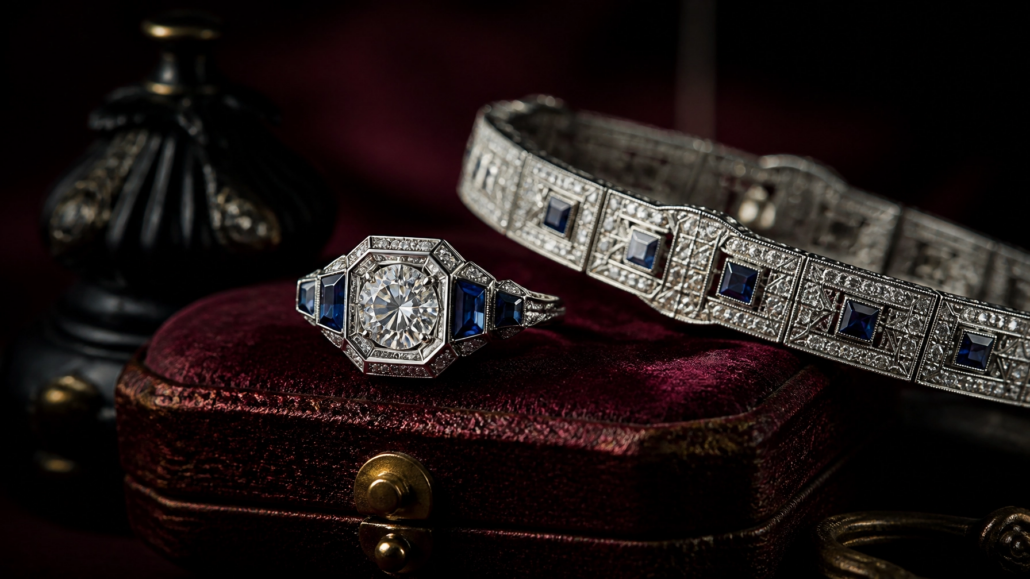
- Metal: Platinum. White gold.
- Stones: Diamonds. Sapphires. Emeralds. Onyx.
- Stone Cuts: Calibré cut. Baguette. Emerald cut.
- Designs: Squares. Triangles. Rectangles. Sunbursts.
Calibré stones fit together. There is no metal between stones. They form a pattern. The pattern is geometric. The colors are high contrast. Black onyx pairs with white diamonds. Green emeralds pair with white platinum. These items are at Blair House Antiques. This is a vintage jewelry knoxville tn source.
Identification Procedures
Examine the back of the stone. A closed metal back indicates Georgian or early Victorian. Open backs indicate later periods. Examine the metal color. Yellow gold is common in Georgian and Victorian eras. White metal is common in Edwardian and Art Deco eras. Check for platinum. Platinum indicates post-1900 production.
Check stone cuts. Rose cuts are antique. Brilliant cuts are modern. Examine the manufacturing method. Hand-carved details indicate age. Machine-stamped details indicate mass production. Check for hallmarks. Hallmarks are metal stamps. They indicate metal purity. They indicate the year. They indicate the maker.
Jewelry Care Protocols

Proper care maintains value. Improper care causes damage.
Cleaning Instructions
- Use lukewarm water.
- Add mild detergent.
- Use a soft brush.
- Scrub the metal.
- Rinse the metal.
- Dry with a soft cloth.
Do not use ultrasonic cleaners for Georgian jewelry. The vibration destroys foil-backing. Do not use ultrasonic cleaners for pearls. The chemical destroys the surface. Do not use ultrasonic cleaners for emeralds. The vibration causes cracks. Do not use steam cleaners for heat-sensitive stones.
Storage Instructions
- Store items separately.
- Use soft pouches.
- Use lined boxes.
- Keep in a dry environment.
- Avoid direct sunlight.
Check prongs. Check clasps. Check hinges. Metal wears over time. Stones become loose. Repairs require a specialist. Blair House Antiques provides access to specialists.
Knoxville Resources

Blair House Antiques is located in Knoxville. The facility is a historic building. It provides estate jewelry knoxville tn. Collectors visit this location. It is an antique store knoxville tn. The inventory undergoes selection by collectors. The process is manual. The process is rigorous.
Visit Information
- Location: 210 N Forest Park Blvd, Knoxville, TN 37919.
- Building: 1920s structure.
- Specialty: Estate jewelry. Sterling silver. Fine antiques.
The atmosphere is formal. The showroom is curated. Staff identify hallmarks. Staff identify stone types. Staff identify historical periods. Buyers can trade items. Buyers can sell items. This includes gold. This includes platinum. This includes diamonds.
Summary of Periods
| Era | Dates | Key Material | Key Design |
|---|---|---|---|
| Georgian | 1714-1837 | Foil-backed stones | Closed backs |
| Victorian | 1837-1901 | Yellow gold | Sentimental symbols |
| Edwardian | 1901-1915 | Platinum | Filigree lace |
| Art Deco | 1920-1939 | White metals | Geometric shapes |
Identification depends on material analysis. Identification depends on construction analysis. Maintenance depends on material sensitivity. Follow protocols for every era. Visit Blair House Antiques for assistance. Review the blog for updates.

