
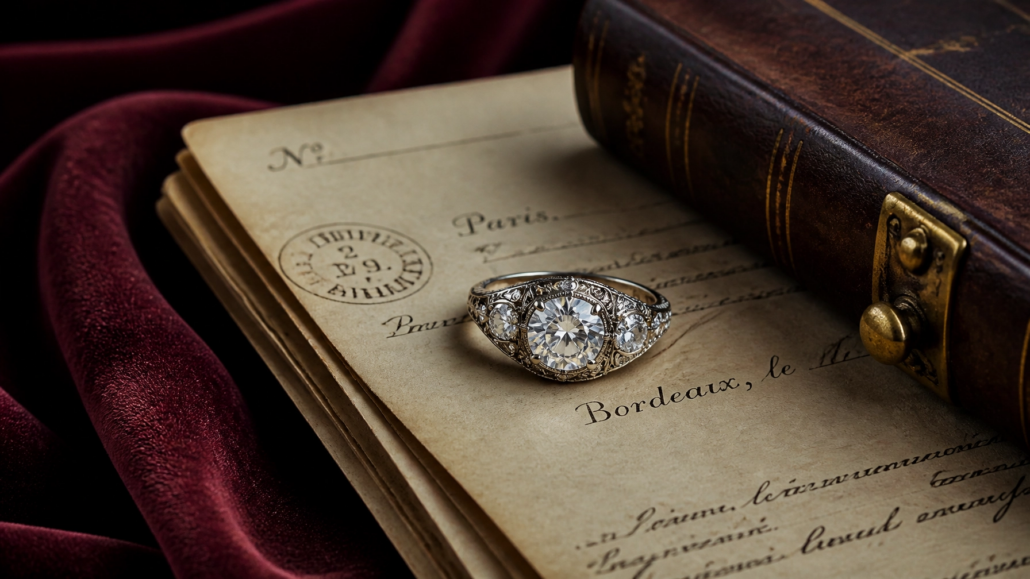
Why Provenance Matters: The Ultimate Guide to Verifying Rare Antiques and Jewelry
Provenance is the chronological record of ownership for an object. It establishes a chain of custody from the date of manufacture to the present time. Provenance serves as primary evidence for authenticity. It confirms legal title. It determines market value. This guide provides technical protocols for verifying provenance in antiques and estate jewelry.
Definition of Provenance
Provenance consists of documented history. This includes receipts and invoices. It includes auction catalogues. It includes previous appraisals and exhibition records. In jewelry, provenance involves original boxes and photographs of the piece in use. Documented history differentiates original items from modern reproductions. It reduces the risk of acquiring stolen or illicit goods.
Documentation Requirements
Verification requires physical or digital records. These records must link the object to specific individuals or events.
- Receipts: Dates of purchase and prices paid.
- Appraisals: Previous evaluations by certified gemologists or antique specialists.
- Certificates of Authenticity: Documents from manufacturers or recognized institutions.
- Auction Logs: Records from established houses such as Sotheby’s or Christie’s.
- Photographic Evidence: Images showing the item in a specific collection or worn by a specific person.
Verification Protocol
Follow these steps to verify an antique or piece of jewelry.
Step 1: Initial Inspection
Use a 10x loupe. Examine metal surfaces. Check for tool marks. Identify casting seams. Note any signs of repair or modification.
Step 2: Hallmark Identification
Check the interior of ring shanks. Inspect the back of clasps. Locate stamps on pin stems. Look for purity marks. Look for maker's marks. Look for assay office marks.

Step 3: Material Analysis
Identify the metal. Common metals include silver, gold, and platinum. Verify the gemstone type. Note the cutting style. Common cuts include rose cut and old mine cut.
Step 4: Record Cross-Referencing
Compare physical attributes with documented records. Dates on hallmarks must match the chronological era of the design. Mismatches indicate a reproduction or an altered piece.
Era-Specific Verification Data
Verification depends on era-specific technical details. Each period utilized distinct materials and construction methods.
Georgian Era (1714–1837)
Georgian jewelry uses silver and yellow gold. Silver fronts with gold backs are frequent. Settings are closed. Diamonds and garnets are often foil-backed to increase reflection. Cuts are irregular. Hand-forged construction is standard. Symmetry is imperfect. Hallmarks are often worn or absent due to age.
Victorian Era (1837–1901)
The Victorian period is divided into three sub-periods.
- Early (Romantic): Gold and silver dominate. Natural motifs are common.
- Mid (Grand): Heavy designs are standard. Mourning jewelry is prevalent.
- Late (Aesthetic): Diamond and gemstone usage increases.
Settings include both closed and open backs. Motifs include hearts and birds. Hallmarks on British pieces use specific date letters for precise year identification.

Edwardian Era (1901–1914)
Platinum is the primary metal for high-end items. Designs are monochromatic. Diamonds and pearls are common. Technical features include milgrain and filigree. Metalwork is thin. Knife-edge wires create a lace-like appearance. Platinum hallmarks become standard during this period.
Art Deco Era (1920–1935)
Design shifts to geometric forms. Symmetry is mandatory. Platinum and white gold are the main metals. Sapphires, rubies, and emeralds provide color contrast. Calibré-cut stones are used to fit specific geometric patterns. Synthetic stones first appear in Art Deco jewelry. Modern hallmarks for platinum and gold are consistent and clear.

Antique Stores in Knoxville TN
Collectors in the Knoxville area utilize local resources for verification. Blair House Antiques is a provider of estate jewelry in Knoxville TN. The facility is located in a 1920s historic building. This location specializes in curated jewelry and fine antiques.
Blair House Antiques Services
The store offers a selection of antique and vintage jewelry. Products include:
- Antique diamond jewelry
- Gemstone jewelry (rubies, sapphires, emeralds)
- Sterling silver jewelry
- Antique chandeliers
- Collectible silver
The inventory is curated by specialists. This ensures the authenticity of pieces from the Georgian to Art Deco eras. Collectors visit the store for one-of-a-kind items and gift options.

Local Verification Resources
- Blair House Antiques: 704 N Central St, Knoxville, TN 37917.
- Local Appraisers: Qualified gemologists verify gemstone quality and metal purity.
- Historical Archives: Local records in Knoxville TN assist in verifying items from regional estates.
Maintenance and Record Keeping
Provenance must be maintained for future transactions. Owners must follow these protocols:
Documentation Storage
Store all original paperwork. This includes receipts and appraisals. Maintain digital copies in a secure location. Update appraisals every three to five years to reflect current market value.
Physical Care
Clean jewelry using appropriate solutions. Avoid ultrasonic cleaners for foil-backed stones. Inspect settings annually for loose stones. Repairs must be documented. Use materials consistent with the original era.
Record of Repairs
Document all interventions. Identify the jeweler. Describe the work performed. Replaced stones or metal additions must be noted in the provenance record.
Summary of Verification Markers
| Feature | Georgian | Victorian | Edwardian | Art Deco |
|---|---|---|---|---|
| Metal | Silver/Gold | Gold/Silver | Platinum | Platinum/White Gold |
| Cut | Rose/Cushion | Old Mine | Rose/Brilliant | Geometric/Calibré |
| Motifs | Floral | Sentiment/Mourning | Garlands/Ribbons | Lines/Angles |
| Setting | Closed/Foil | Mixed | Open/Milgrain | High Precision |
Conclusion
Provenance is the primary tool for antique verification. Documentation, hallmarks, and material analysis are the technical components of the process. Collectors of vintage jewelry in Knoxville TN utilize specialized antique stores for expert curation. Maintaining accurate records ensures the value and authenticity of rare pieces.
For more information on available estate jewelry or to view current collections, visit the Blair House Antiques website.

